
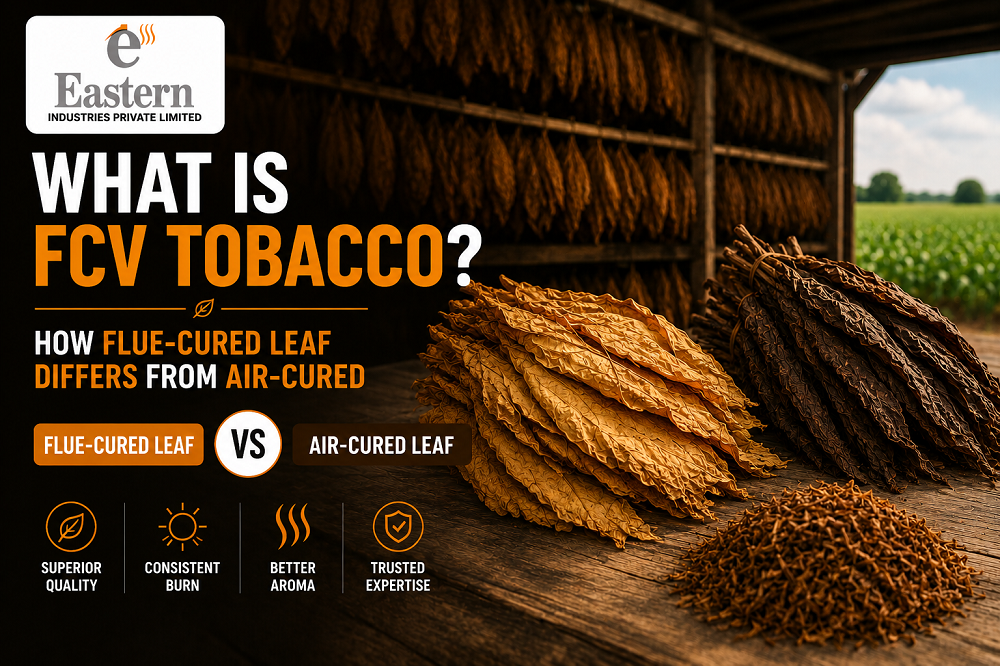
What Is FCV Tobacco? How Flue-Cured Leaf Differs from Air-Cured
Not all tobacco leaves are created equal. Two leaves grown in the same field, harvested in the same week, can end up tasting completely different depending on one thing that happens after the harvest. How they are cured. That single variable, the curing method, shapes everything from colour to moisture content to how the finished cigarette actually smokes. FCV tobacco sits at the centre of that conversation, and if you work anywhere in the tobacco supply chain, understanding what it is and how it compares to air-cured alternatives is not optional knowledge. It is foundational.
What Does FCV Actually Mean?
FCV stands for Flue-Cured Virginia. The name carries two pieces of information. Virginia refers to the variety of tobacco plant, originally cultivated in the Virginia region of the United States and now grown across multiple countries including Zimbabwe, Brazil, India, and Pakistan. Flue-cured refers to the drying method used after harvest, where the leaf is exposed to heat generated by flues, which are pipes or ducts carrying hot air through the curing barn without the leaf ever coming into direct contact with smoke or flame.
The result of that process is a leaf that is bright in colour, typically ranging from lemon yellow to orange, with a naturally high sugar content and relatively low nicotine compared to other tobacco leaf types. That sugar content is not accidental. It is a direct product of the flue-curing environment and it is precisely what makes FCV tobacco so valuable as a base leaf in commercial cigarette production.
How Flue-Curing Actually Works?
After harvest, the leaves are hung inside purpose-built curing barns and exposed to a carefully managed temperature programme that runs over several days. The process starts at relatively low temperatures to allow moisture to escape from the leaf slowly without collapsing the cell structure. Temperatures are then raised progressively to fix the colour, which is where the bright yellow and orange tones develop, and finally increased further to dry the midrib of the leaf completely.
The entire cycle typically runs between four and seven days depending on the leaf position on the plant, the ambient humidity, and the specific colour and moisture targets the grower is working toward. Precision matters here. A barn that runs too hot too early produces a dark, case-hardened leaf that has lost the sugar content that makes FCV tobacco worth buying. A barn that runs too cool produces a leaf that never fully cures and carries excess moisture into storage. Neither outcome is recoverable after the fact.
FCV vs Air-Cured Tobacco: Where the Real Differences Lie
The comparison between flue cured tobacco vs air cured is not just a technical distinction. It translates directly into how the finished cigarette behaves and what the smoker experiences.
Sugar Content
Flue-cured leaf retains significantly higher natural sugars than air-cured varieties. Those sugars contribute to the lighter, slightly sweet smoke profile that most consumers associate with mainstream international cigarette brands. Air-cured tobacco, particularly Burley, loses most of its natural sugars during the curing process, which is why Burley-heavy blends tend to produce a drier, more robust character that sits very differently on the palate.
Nicotine Levels
Air-cured tobacco generally carries higher nicotine than flue-cured. Burley in particular is known for its nicotine weight, which is one of the reasons it is used strategically in blends where strength is part of the product’s identity. FCV delivers a cleaner, more moderate nicotine experience, which makes it easier to position across a broader consumer base without alienating lighter smokers.
Burn and Draw Characteristics
Flue-cured leaf burns evenly and produces a consistent draw from the first puff to the last. That evenness is one of the reasons it dominates in mainstream cigarette production. Air-cured varieties can produce a slower, heavier burn that changes character as the cigarette shortens. Neither is inherently better. They serve different purposes in the blend and experienced manufacturers use that difference intentionally rather than by default.
Virginia Tobacco Leaves and Their Role in Global Blends
Virginia tobacco leaves are the most widely used raw material in commercial cigarette manufacturing worldwide. The variety thrives in well-drained sandy soils and responds predictably to flue-curing in a way that other varieties do not, which is why it became the global standard for light cigarette production rather than any of the dozens of other leaf types that could theoretically fill the same role.
In blending terms, Virginia acts as the canvas. It is neutral enough to carry flavour additions without competing with them, consistent enough in its burn profile to anchor a blend, and versatile enough to work across king size, slim, and super slim formats without requiring significant adjustment to the cut or compression parameters. Most international blends use Virginia as 50 to 70 percent of the total leaf composition, with Burley, Oriental, and other varieties filling the remaining share depending on the target profile. Understanding tobacco leaf types and how they interact is what separates a competent blender from a genuinely skilled one.
FCV Tobacco in Pakistan
FCV tobacco Pakistan production is centred in Khyber Pakhtunkhwa, where the soil conditions and climate create growing conditions that suit the Virginia variety well. Pakistani FCV has built a quiet but consistent reputation among international buyers who source across multiple origins. The leaf tends to produce a clean flavour profile with good combustion characteristics, and the price point relative to comparable origins from Brazil or Zimbabwe makes it genuinely competitive for buyers who are managing production costs without wanting to compromise on leaf quality.
Export volumes from Pakistan have grown as more manufacturers look to diversify their sourcing away from traditional origins where supply concentration creates risk. Pakistani growers and processors who can deliver consistent tobacco leaf grading documentation alongside their shipments are finding a more receptive international market than at any point in the past two decades. Buyers today are more rigorous about provenance and specification than they used to be, and the ability to provide traceable, graded leaf is increasingly a baseline requirement rather than a value-add.
What Buyers Should Look for in FCV Leaf?
When evaluating FCV tobacco for purchase, experienced buyers look at a specific set of characteristics before committing to a volume. Colour uniformity across the batch is the first signal. Inconsistent colour indicates inconsistent curing, and inconsistent curing means the leaf will behave unpredictably in the blend. Moisture content at delivery matters equally. Leaf arriving outside the 10 to 13 percent range either dries out during storage or creates mold risk depending on which direction it sits outside the target.
Lamina to stem ratio is another key measure, particularly for buyers sourcing leaf for further processing. A high stem content reduces the usable yield per kilogram and increases the processing cost before the leaf ever reaches the blending room. Buyers who work with a premium threshed tobacco supplier rather than purchasing raw unprocessed leaf avoid a significant portion of that complexity, since the threshing and separation has already been handled upstream.
Eastern Tobacco’s FCV Supply and Processing Standards
Eastern Tobacco sources FCV tobacco from Pakistani-grown Virginia crops and processes it through facilities in the Export Free Zone in Karachi. The sourcing is deliberate and the processing standards are built around what international buyers actually need rather than what is convenient to produce. Moisture targets, colour consistency, and lamina quality are monitored through the processing run rather than checked at the end, which is where most quality problems in tobacco processing get caught too late to fix without significant rework.
For buyers who require documentation alongside their leaf, Eastern Tobacco provides grading specifications that align with international trade standards. Combined with the export advantages that come with Free Zone status, the overall cost and compliance picture for international buyers is considerably cleaner than sourcing through intermediaries who add margin without adding processing value. If you want to understand more about how a leaf is assessed before it ships, the details on tobacco leaf grading cover the full grading framework and what each classification means in practice.
Conclusion
FCV tobacco is not just one leaf type among many. It is the leaf that the global cigarette industry was largely built around, and understanding why it performs the way it does, from the curing barn through the blending room to the finished cigarette, gives buyers and manufacturers a clearer picture of what they are actually working with. The difference between flue-cured and air-cured is not a footnote in a technical manual. It is the difference between two fundamentally different products with different roles, different strengths, and different places in a well-constructed blend. Knowing which one you need, and where to source it reliably, is where good procurement starts.