
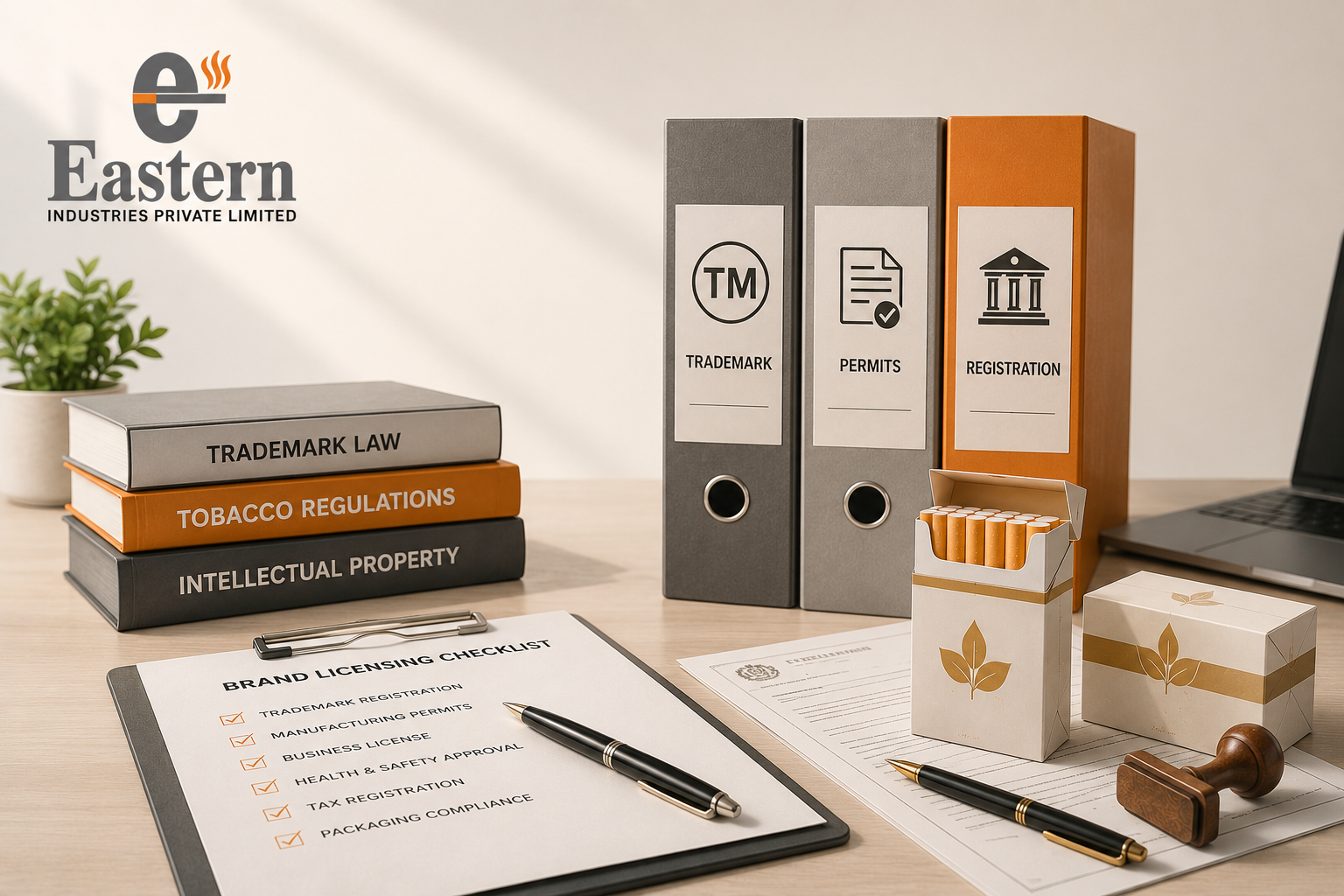
Cigarette Brand Licensing: What Trademarks, Permits and Registrations Do You Need?
Most entrepreneurs who decide to launch a cigarette brand spend their early energy thinking about the product. The blend, the packaging, the name, the market. Those decisions matter enormously. But there is a parallel process that has to happen alongside all of that, and if it is handled too late or too casually it can stop a finished product from legally entering the market it was built for. Cigarette brand licensing requirements cover several distinct categories, trademark protection, manufacturing permits, distribution licences, and export documentation, and none of them wait for the product development process to finish before they become relevant. Getting ahead of them early is one of the practical differences between a brand launch that goes smoothly and one that stalls in administrative limbo while the product sits in a warehouse.
Why Licensing and Legal Registration Matter More in Tobacco Than Most Industries?
Tobacco is one of the most heavily regulated product categories in the world. Every stage of the supply chain, from cultivation and processing through manufacturing, distribution, and retail, operates under a framework of licences, permits, and tax obligations that vary by country and change regularly as governments update their tobacco control policies. A brand that enters this space without understanding the legal framework it is operating within is not just taking a risk. It is operating without the foundation that makes the business legally viable in the first place.
The consequences of getting this wrong are not abstract. Products manufactured without the correct permits are subject to seizure. Brands that have not registered their trademarks before launch have no legal recourse when a competitor copies their identity. Export shipments without correct documentation get held at destination ports and generate compliance records that affect future import approvals. Every one of those outcomes is preventable with the right preparation, and that preparation starts with understanding what the cigarette brand licensing requirements framework actually contains.
Trademark Registration: Protecting the Brand Identity
The first legal step for any new cigarette brand is trademark registration, and it should happen before the brand name appears on any packaging, any sample, or any market communication. A trademark gives the brand owner the exclusive legal right to use a specific name, logo, or combination of both in connection with tobacco products in the jurisdictions where it is registered. Without that registration, a competitor can legally adopt a similar name or visual identity and the original brand owner has very limited legal standing to object.
Tobacco brand trademark registration in Pakistan is handled through the Intellectual Property Organization of Pakistan. The process involves a trademark search to confirm the proposed name is not already registered in the same product class, submission of the application with the relevant class designation for tobacco products, and a formal examination and publication period before the trademark is granted. The timeline varies but the process is not instantaneous, which is one of the reasons starting the trademark application early in the brand development process rather than after the product is ready to launch is strongly advisable.
For brands targeting export markets, trademark registration in Pakistan alone is not sufficient. A brand sold in the UAE, Kenya, or Malaysia needs trademark protection in each of those jurisdictions independently. International registration through the Madrid Protocol system simplifies multi-country protection for brands targeting multiple markets simultaneously, but it still requires the foundational Pakistani trademark registration as its starting point. Thinking about launching a cigarette brand without building the trademark strategy into the early planning stage is one of the most common and most expensive oversights new brand owners make.
Manufacturing Licences and Permits in Pakistan
Operating a cigarette manufacturing facility in Pakistan requires a set of licences and permits that sit at different levels of government. The Federal Board of Revenue issues the primary manufacturing licence for tobacco products, which includes registration under the relevant excise framework. Without this registration, cigarette production is not legally permitted regardless of the quality of the facility or the product being produced.
The cigarette manufacturing licence Pakistan framework also involves registration with the Pakistan Tobacco Board, which has regulatory oversight of tobacco cultivation, processing, and manufacturing at the federal level. Manufacturers operating in Export Free Zones carry an additional layer of registration specific to their zone authority, which governs the duty and tax treatment of their production and exports. These are not overlapping or redundant registrations. Each serves a distinct legal purpose within the overall regulatory framework and each has its own renewal and compliance obligations that have to be maintained on an ongoing basis rather than treated as a one-time administrative task.
For brand owners who are not building their own manufacturing facility but instead sourcing through a private label cigarette manufacturer, the manufacturing licence responsibility sits with the manufacturer rather than the brand owner. This is one of the practical advantages of the private label model for new brands, the regulatory burden of maintaining a manufacturing licence does not fall on a business that may not yet have the administrative infrastructure to manage it alongside everything else involved in a market launch.
Distribution and Retail Licensing
Selling cigarettes in the Pakistani domestic market requires distribution and retail licences that operate at the provincial level rather than federally. Each province has its own licensing framework for tobacco retail, and distributors moving product across provincial boundaries need to understand how those frameworks interact. This is an area where local legal advice pays for itself quickly, because the provincial variation means a national distribution network involves multiple distinct licensing obligations rather than a single national permit.
For brands focused exclusively on export, the domestic distribution licensing framework is less immediately relevant, but the export documentation framework takes on equivalent importance. Every shipment leaving Pakistan for an international market requires a certificate of origin, a packing list, a commercial invoice, and depending on the destination market, additional regulatory certificates that have to be applied for and issued before the shipment can clear customs at both ends. The detail on cigarette export documentation covers that framework in depth for exporters who want to understand the full compliance picture before they place their first international order.
Brand Protection Beyond Trademark Registration
Brand protection cigarette manufacturer considerations go beyond the initial trademark filing. In markets where counterfeit tobacco products are a genuine commercial risk, which includes several of the export markets Pakistani manufacturers serve across Africa and Southeast Asia, protecting a brand identity requires active monitoring and enforcement as well as the underlying legal registration.
Practical brand protection measures include using unique packaging features that are difficult to replicate, maintaining consistent documentation trails that establish origin and authenticity for every shipment, and working with distributors who understand that selling counterfeit product under the brand name creates liability for everyone in the supply chain. A trademark registration establishes the legal foundation. Protecting it in practice requires ongoing commercial vigilance that is separate from but dependent on having that foundation in place.
What Brand Owners Working Through Contract Manufacturing Need to Know?
For brands using contract cigarette manufacturing, the licensing landscape involves a clear division of responsibility between the manufacturer and the brand owner. The manufacturer holds and maintains the production licences, excise registrations, and export authority certifications that govern how the product is made and shipped. The brand owner is responsible for the trademark registration that protects the brand identity, the import licences required in the destination market, and any local distribution permits needed to sell the product once it arrives.
That division is not always clearly articulated in the early stages of a contract manufacturing relationship, and misunderstandings about who is responsible for which licence or permit are a more common source of launch delays than most brand owners expect going in. Getting clarity on the licensing responsibilities in the contract itself rather than assuming they are covered somewhere is one of the more practically useful legal steps a new brand owner can take before production begins.
Understanding the tobacco business permit landscape before signing any manufacturing agreement also prevents the situation where a brand discovers a required permit is missing after production is already complete and the product is ready to ship. That discovery at the wrong moment is expensive in ways that are entirely avoidable with the right legal preparation at the beginning of the process.
Conclusion
The legal and licensing framework for a cigarette brand is not the exciting part of building one. But it is the part that determines whether the product can actually reach the market it was built for. Cigarette brand licensing requirements span trademark registration, manufacturing permits, export documentation, and distribution licences, and each category has its own timeline, its own authority, and its own consequence for getting it wrong. Brands that treat this framework as something to address after the product is ready consistently find themselves delayed at the point where they are most ready and most motivated to launch. The ones that address it in parallel with product development arrive at launch day with everything in place rather than a list of outstanding approvals standing between them and their first sale.