
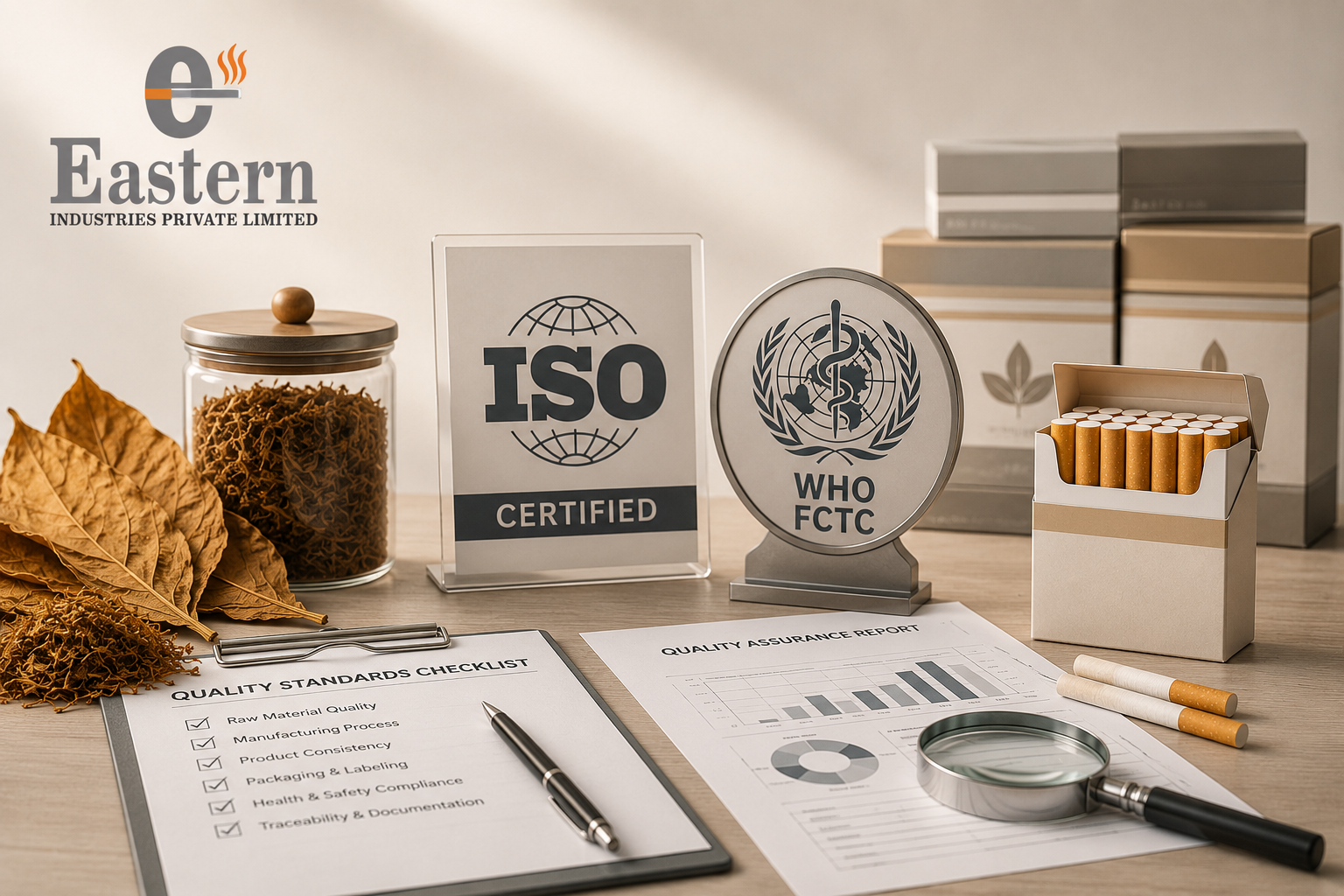
Tobacco Quality Standards: What ISO Certification and WHO FCTC Mean for Buyers
Most international buyers sourcing tobacco today operate in a very different environment from even a decade ago. The documentation requirements are stricter. The regulatory expectations at destination ports have tightened. And the questions buyers ask during supplier evaluation have become considerably more specific. At the centre of many of those questions are two frameworks that come up repeatedly but are not always fully understood by the buyers who reference them. Tobacco quality standards ISO certification and WHO FCTC compliance are not the same thing, they operate at different levels and serve different purposes, but together they form the quality and regulatory foundation that serious international buyers now expect suppliers to be able to speak to clearly before any commercial relationship begins.
What ISO Standards Actually Cover in Tobacco
The International Organization for Standardization has developed a specific set of standards that apply to tobacco and tobacco products. These are not general quality management standards applied to tobacco by extension. They are tobacco-specific technical documents that define testing methodologies, measurement protocols, and sampling procedures for evaluating leaf quality and finished product characteristics.
The most practically relevant ISO standards in tobacco procurement cover areas including the determination of moisture content, the measurement of nicotine and alkaloid levels, the assessment of physical leaf characteristics, and the testing of combustion properties in finished cigarettes. When a buyer specifies that they require product tested to tobacco quality standards ISO, they are asking the supplier to demonstrate that their quality testing follows internationally recognised methodologies rather than proprietary in-house procedures that cannot be independently verified or compared against results from other suppliers.
This distinction matters because it makes quality data comparable. A moisture reading of 12.5 percent from a supplier using a validated ISO test method means the same thing as a 12.5 percent reading from any other supplier using the same method. A moisture reading produced by an unvalidated in-house method cannot be reliably compared against anything, which means it cannot be used as the basis for an informed procurement decision. ISO tobacco testing standards exist precisely to create that comparability across a global supply chain where buyers and sellers rarely share the same laboratory equipment or testing environment.
Key ISO Standards Tobacco Buyers Should Know
While the full list of tobacco-related ISO standards is extensive, a handful of them appear most frequently in commercial procurement conversations and are worth understanding at a practical level.
ISO 3400 Series
This series covers the routine analytical testing of cigarettes and cut tobacco, including methods for determining moisture content, total alkaloids, reducing sugars, and chlorine content. These are the tests that directly affect blend performance and combustion behaviour, which makes them the most commercially relevant ISO standards for buyers sourcing processed leaf or finished cigarettes.
ISO 8243
This standard covers cigarette sampling. It defines how samples should be drawn from a production batch to ensure they are statistically representative of the full production run rather than cherry-picked. A supplier who can demonstrate that their quality documentation follows ISO 8243 sampling procedures is giving the buyer evidence that the test results reflect the actual batch rather than a selected sub-sample that may not represent typical output.
ISO 4387
This standard covers the determination of total and nicotine-free dry particulate matter in cigarette smoke. It is one of the most widely referenced standards in finished cigarette testing and appears frequently in regulatory compliance documentation for destination markets that require smoke yield data as part of their import requirements.
What WHO FCTC Actually Requires
The World Health Organization’s Framework Convention on Tobacco Control is a treaty-level international agreement rather than a technical testing standard. Most countries have ratified it, which means their domestic tobacco control legislation is expected to align with its provisions, though implementation varies significantly between signatories.
For buyers, WHO FCTC tobacco compliance most commonly surfaces in two areas. Packaging and labelling requirements, where the FCTC sets minimum standards for health warning size, placement, and content that signatory countries are expected to implement in their own legislation. And product disclosure requirements, where manufacturers are expected to provide regulatory authorities with data on the ingredients, emissions, and design features of their products.
A supplier who claims FCTC compliance is essentially claiming that their product and documentation practices align with the minimum standards that the international community has agreed should apply to tobacco products. That claim is worth verifying rather than accepting at face value, because FCTC compliance is self-declared rather than independently certified in most markets. The depth of verification appropriate here is exactly what a proper [tobacco supplier audit] is designed to assess, covering not just the documentation a supplier provides but the actual practices behind it.
International Quality Benchmarks Beyond ISO and FCTC
Beyond the ISO and FCTC frameworks, international tobacco quality benchmarks include a range of market-specific and industry-level standards that buyers in different regions apply alongside the international frameworks. The European Union’s Tobacco Products Directive sets specific requirements for nicotine yield, emissions testing, and ingredient disclosure that apply to products entering EU markets regardless of where they were manufactured. Gulf Cooperation Council markets have their own GSO standards for tobacco products that operate alongside FCTC provisions. Several African markets reference both WHO guidance and their own national standards simultaneously.
The practical implication for a Pakistani manufacturer exporting to multiple regions is that ISO testing standards provide the foundation, FCTC compliance covers the regulatory baseline, and destination-specific standards layer on top of both. A supplier who understands this structure and can demonstrate compliance at each level is in a significantly stronger position with international buyers than one who can only speak to one layer of the framework.
What Buyers Should Ask Suppliers About Standards Compliance
Knowing that standards exist is different from knowing how to verify that a supplier actually meets them. Tobacco leaf certification buyer conversations that stay at the level of asking whether a supplier is ISO compliant without probing what that actually means in practice rarely surface the information needed to make a confident sourcing decision.
More useful questions include asking which specific ISO standards the supplier’s testing laboratory follows, whether that laboratory is accredited by a recognised national or international accreditation body, how frequently quality testing is conducted during production runs rather than only at final inspection, and what documentation is provided with each shipment to support the buyer’s own regulatory compliance requirements in their destination market.
Asking to see a sample [tobacco quality certificate] from a recent shipment is one of the most direct ways to evaluate whether a supplier’s documentation practice matches their verbal claims about quality standards. A well-prepared certificate tells you a great deal about the rigour of the supplier’s quality management system before you have committed any volume to them.
How Quality Standards Affect Leaf Procurement Specifically
For buyers sourcing tobacco leaf rather than finished cigarettes, quality standards operate at a more foundational level. The testing methodologies that determine whether a batch of threshed leaf meets the specification it was sold against need to be standardised enough that disputes can be resolved on the basis of objective data rather than competing interpretations of what was agreed.
Moisture content, lamina ratio, grade classification, and physical defect assessment are all areas where the absence of standardized testing methodology creates ambiguity that inevitably gets resolved in favour of whichever party has more leverage in the relationship. Buyers who specify ISO-aligned testing methods in their purchase contracts remove that ambiguity and give themselves a defensible basis for accepting or rejecting shipments that do not meet specification. Sourcing from a high-quality threshed tobacco supplier who already operates to documented quality standards reduces the friction in those conversations because the baseline expectation is established before the first shipment rather than negotiated after a dispute arises.
Eastern Tobacco’s Approach to Quality Standards
Eastern Tobacco’s processing and manufacturing operations are built around documented quality procedures that align with international testing standards across the key parameters that international buyers specify. Moisture content verification, lamina ratio assessment, and combustion characteristic testing all follow documented methodologies that produce results buyers can use in their own quality management systems rather than treating as supplier-generated data of uncertain comparability.
For export shipments, the quality documentation package provided alongside each order is designed to meet the regulatory requirements of the destination market rather than defaulting to a generic format that may or may not satisfy the specific import compliance needs of the buyer’s local authority. That level of documentation preparation reflects an understanding that a supplier’s quality standards are only as useful as the evidence they produce, and that evidence has to travel with the product rather than staying in the factory.
Conclusion
Tobacco quality standards ISO certification and WHO FCTC compliance are not interchangeable terms and they are not box-ticking exercises for suppliers who take international trade seriously. They are the frameworks that make quality verifiable, comparable, and defensible across a supply chain where buyers and sellers operate in different regulatory environments with different assumptions about what quality means. Buyers who understand the difference between these frameworks ask better questions, make more informed sourcing decisions, and build supplier relationships on a foundation of verified performance rather than assumed capability. In a market where the cost of a bad sourcing decision shows up in production problems and regulatory complications, that foundation is worth building carefully.