
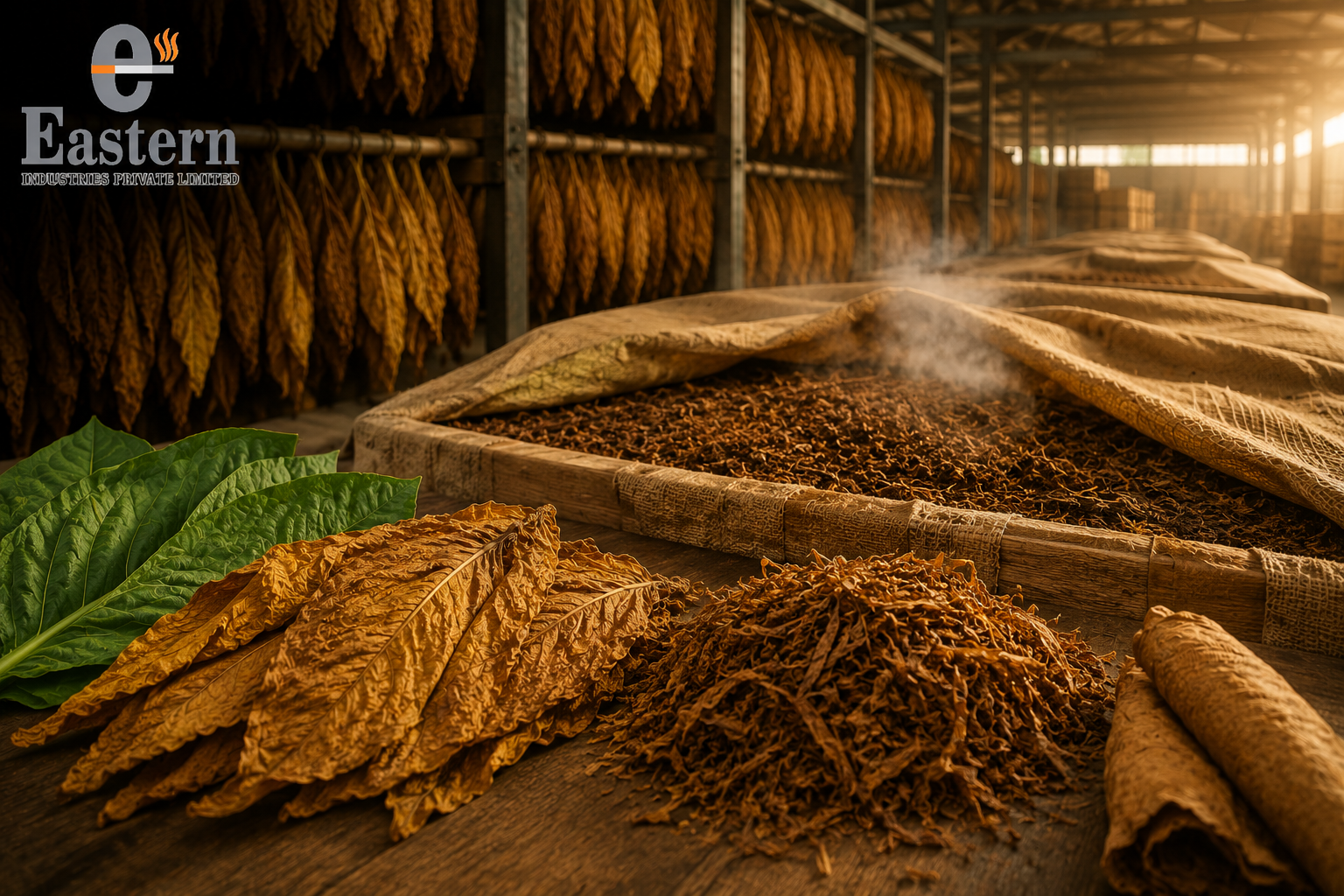
Tobacco Fermentation: Why It Matters and How It Changes Leaf Quality
There is a stage in tobacco processing that most people outside the industry have never heard of, and yet it is responsible for some of the most significant changes in how a finished cigarette tastes, smells, and burns. It is not the harvest. It is not the curing. It happens after both of those things are done, in a warehouse, over weeks or months, while the leaf sits in carefully managed conditions doing something that looks from the outside like nothing at all. The tobacco fermentation process is one of the quietest steps in the supply chain and one of the most consequential, and understanding what it actually does to leaf quality changes the way buyers, manufacturers, and brand owners think about what they are sourcing and what they are building.
What Tobacco Fermentation Actually Is
Fermentation in tobacco is a biochemical transformation that occurs within the leaf itself after curing is complete. It is driven by enzymes naturally present in the tobacco and by microbial activity that develops under the right conditions of temperature, moisture, and oxygen availability. Unlike fermentation in food or beverages where the process is initiated by adding specific cultures or ingredients, tobacco fermentation is largely self-directed. The leaf contains everything it needs to transform itself. The manufacturer’s job is to create and maintain the conditions that allow that transformation to proceed in a controlled and beneficial direction.
The tobacco fermentation process produces a range of chemical changes within the leaf structure. Proteins break down into simpler amino acids. Chlorophyll degrades, which is partly responsible for colour changes in fermented leaf. Harsh, acrid compounds that contribute to throat irritation in unfermented tobacco are reduced or modified. Natural sugars undergo partial transformation. Nicotine levels shift slightly. The net effect of all these changes, when fermentation is managed correctly, is a leaf that is chemically more complex, physically more stable, and significantly more pleasant to smoke than the same leaf before fermentation began.
How the Fermentation Process Works
The most common commercial method is bulk fermentation, sometimes called pile fermentation or stack fermentation. Cured tobacco leaves are assembled into large rectangular piles, typically called bulks or mow-burns in different regional traditions, and left to generate their own heat through the biological activity happening within the leaf mass. The interior of a well-constructed bulk can reach temperatures of 50 to 65 degrees Celsius during active fermentation, which is high enough to drive the desired chemical transformations without cooking the leaf to the point of damage.
Bulk fermentation tobacco management requires regular monitoring and physical intervention. The outside of the pile is cooler than the centre, which means the leaf on the exterior ferments more slowly than the leaf at the core. To achieve even fermentation across the entire bulk, the pile has to be broken down and rebuilt periodically, rotating the outer leaf to the interior and the interior leaf to the outside. This process is called turning and it is both labour-intensive and critical to the quality of the final output. Piles that are not turned regularly produce unevenly fermented leaf where some portions are over-processed and others are barely changed from their pre-fermentation state.
Temperature monitoring during active fermentation is not optional. A bulk that runs too hot for too long damages the leaf structure and produces a harsh, overworked character that cannot be corrected downstream. A bulk that does not reach sufficient temperature is under-fermented, which means the harsh compounds that fermentation is supposed to reduce remain in the leaf and show up in the finished cigarette. The window between too little and too much is manageable but it requires consistent attention throughout the process.
Tobacco Aging vs Fermentation: Understanding the Difference
These two terms are used interchangeably in some industry conversations and they should not be. Tobacco aging vs fermentation describes two distinct processes that produce different outcomes and operate on different timescales.
Fermentation is an active biochemical process driven by enzymatic and microbial activity. It produces measurable chemical changes in the leaf over a period of weeks to months and requires specific conditions of moisture and temperature to proceed correctly. It is a managed process with a defined objective and a point of completion.
Aging is the continuation of slower chemical changes that occur in leaf after fermentation is complete, typically in baled or packaged form over months or years at ambient storage conditions. The chemical activity during aging is much slower and lower in intensity than during fermentation, but it continues to refine the flavour profile and physical characteristics of the leaf over time. Premium cigar tobaccos are frequently aged for years after fermentation is complete. In the cigarette industry, aging timelines are shorter but the principle is the same. A well-fermented leaf that is allowed to age for several months before processing will generally produce a more refined smoke character than the same leaf processed immediately after fermentation ends.
How Fermentation Changes Leaf Quality in Practice
The quality improvements that a properly managed fermented tobacco leaf quality process delivers are measurable and consistent across the key parameters that buyers and manufacturers care about most.
Harshness reduction is the most immediately noticeable effect. Unfermented tobacco produces a sharp, acrid character on the throat that experienced smokers find unpleasant and that limits the blend’s palatability at any strength level. Fermentation breaks down the compounds responsible for that character, producing a smoother draw that allows the positive flavour notes in the tobacco to come through more clearly.
Combustion improvement is another significant benefit. Fermented leaf burns more evenly and completely than unfermented leaf, which means the finished cigarette produces less sidestream smoke, burns more slowly, and delivers a more consistent experience from the first puff to the last. This is not just a consumer experience benefit. It affects the technical performance of the blend in the making machine and the fill weight consistency of the finished cigarette.
Aroma development is the third major quality change. The biochemical transformations during fermentation generate new aromatic compounds that were not present in the cured leaf before fermentation began. These compounds contribute to the characteristic richness and complexity that distinguishes well-processed tobacco from raw or minimally processed leaf. The specific aroma profile that develops depends on the leaf type, the fermentation conditions, and the duration of the process, which is why fermentation management is as much an art as a technical process for manufacturers who are trying to achieve a specific sensory outcome rather than simply meeting a minimum quality threshold.
The Connection Between Curing and Fermentation
Fermentation does not happen in isolation from the earlier stages of tobacco processing. The condition of the leaf entering fermentation is directly determined by how it was cured, and [tobacco leaf curing methods] set the starting point for everything that fermentation can achieve. A leaf that was poorly cured, with uneven moisture distribution or inconsistent colour development, will not ferment uniformly regardless of how well the bulk is constructed and managed. Fermentation amplifies what is already in the leaf. It cannot compensate for fundamental curing problems.
This is why the [tobacco processing quality] standards applied at the curing stage matter as much as the fermentation management that follows. The entire post-harvest processing chain is connected, and the quality of the finished fermented leaf is a product of every decision made at each stage rather than the outcome of fermentation alone.
Moisture Control During Fermentation
Moisture management during the tobacco curing and fermentation process is a critical variable that affects both the intensity of the fermentation and the risk of mold development within the bulk. Leaf that enters fermentation too dry does not develop sufficient microbial and enzymatic activity to reach the temperature levels needed for effective fermentation. Leaf that enters fermentation too moist creates conditions where mold can develop faster than the fermentation process can suppress it, which produces a contaminated batch that has to be written off entirely.
The target moisture range for leaf entering fermentation varies by leaf type but generally sits between 16 and 20 percent, higher than the 12 to 14 percent target for processed leaf ready for blending. That higher moisture level is necessary to support the biological activity that drives fermentation, and it is actively managed back down to processing range once fermentation is complete. The connection between moisture and fermentation quality is direct and consistent, and manufacturers who source from a threshed tobacco leaf processing supplier with documented moisture management practices have a clearer picture of the leaf’s processing history than those sourcing from suppliers who cannot provide that documentation.
How Eastern Tobacco Approaches Fermentation
Eastern Tobacco incorporates fermentation management into its leaf processing operation as a standard quality step rather than an optional enhancement. The process follows documented temperature and moisture parameters that ensure consistent transformation across each batch rather than relying on visual assessment alone. Leaf that has completed fermentation is tested for moisture and quality characteristics before it moves forward into the blending and cutting stages, which means the fermented leaf quality is verified at the point where it matters most rather than assumed to be correct.
For buyers sourcing processed leaf, that documentation trail gives the purchase a quality history that can be referenced in any dispute about delivered specification. Fermentation is one of the processing steps that leaves the clearest signature on leaf quality, and buyers who understand what well-fermented leaf looks, smells, and tests like are in the strongest position to evaluate what they are receiving against what was promised.
Conclusion
The tobacco fermentation process is not a finishing touch applied to already-good tobacco. It is a fundamental quality transformation that determines whether the leaf will perform well in a blend or fight against everything the blender is trying to achieve. The harshness reduction, the combustion improvement, the aroma development, none of those outcomes happen by accident. They are the product of careful process management across every stage of fermentation from bulk construction through temperature monitoring to final moisture correction. Buyers who understand what fermentation does and who ask the right questions about how