
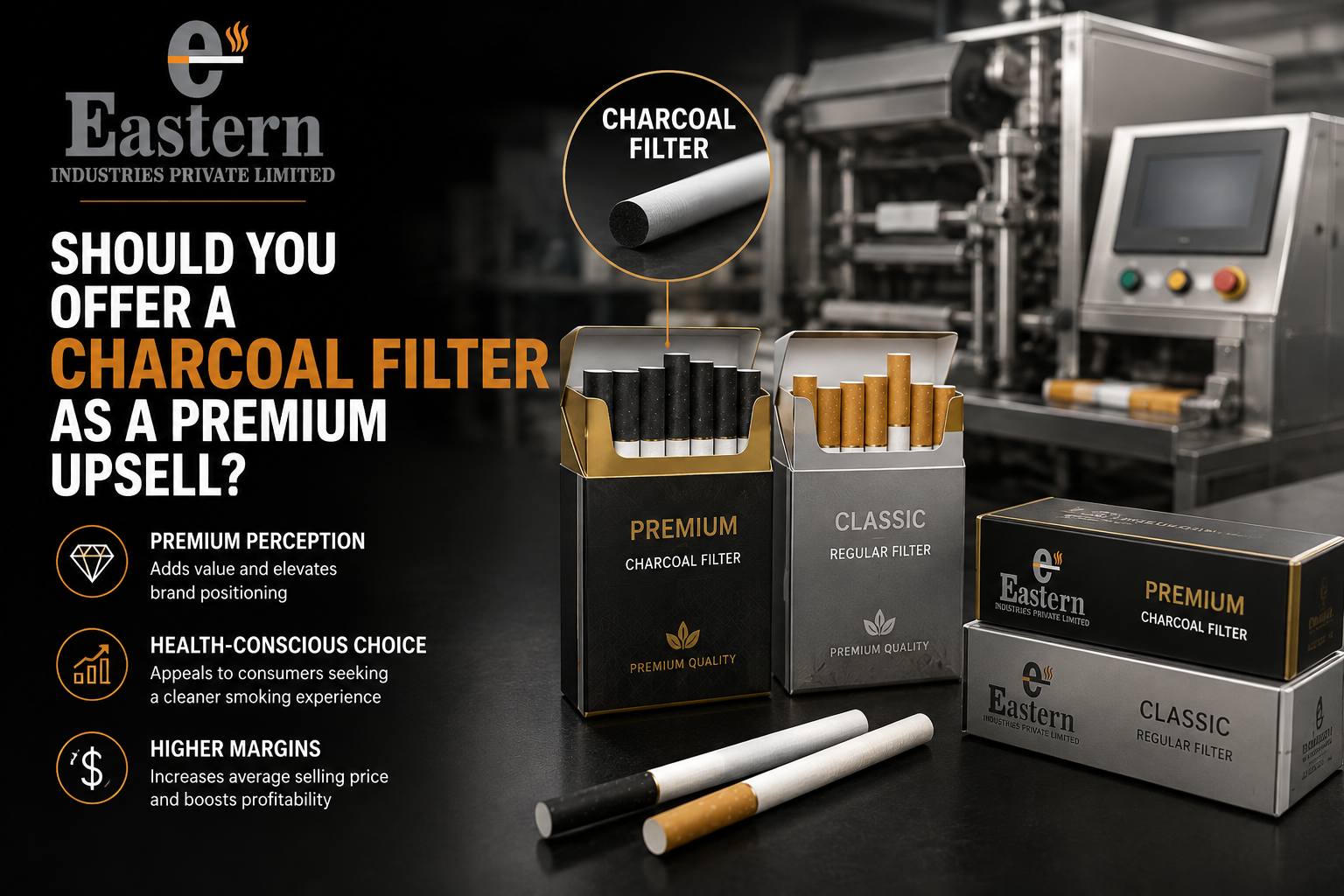
Should You Offer a Charcoal Filter as a Premium Upsell
Filter innovation has quietly become one of the most effective levers in cigarette brand strategy. While packaging and blend get most of the attention, the humble filter has repeatedly proven its ability to shift a product into a higher price tier. Among these innovations, the charcoal filter stands out as one of the longest-standing and most credible upsell options available to manufacturers. But credibility alone doesn’t answer the real question brands are asking: is it actually worth adding to your line, and can the added cost be justified by the price increase it supports?
This decision touches manufacturing, marketing, and margin all at once. Getting it right means understanding not just what a charcoal filter does, but how it fits into a broader pricing and positioning strategy that customers will actually respond to.
What Is a Charcoal Filter and Why It Stands Apart
A charcoal filter uses activated carbon, typically derived from coconut shell or other carbon-rich materials, to filter smoke differently than standard cellulose acetate filters. The porous structure of activated carbon has a large surface area relative to its size, which allows it to adsorb certain compounds from the smoke stream as it passes through. This is a distinct mechanism from the mechanical filtration cellulose acetate relies on, and it’s part of why charcoal filters are frequently marketed around claims of a smoother, cooler draw.
Importantly, this isn’t just a marketing story. The filtration difference is a genuine chemical process, not simply a design variation. That distinction matters for premium positioning because it gives brands an authentic product basis to build messaging around, rather than a cosmetic change dressed up as innovation. Customers who are skeptical of superficial “upgrades” tend to respond better when there’s a real mechanical difference behind the claim.
The Case for Treating Charcoal as a Premium Feature
Industry pricing research shows that manufacturers have long used charcoal filters specifically to grow their premium sales mix, even in periods when overall volume was declining. This is a meaningful signal. It suggests the appeal of a charcoal filter isn’t dependent on rising demand across the category. Instead, it works as a value lever within a manufacturer’s existing customer base, encouraging smokers who already buy the brand to trade up rather than switch away.
This pattern tends to hold because filter innovation appeals to a specific psychological driver: the perception of a more refined product. Premium positioning in this category often works through subtle cues rather than loud claims, and a charcoal filter provides exactly that kind of quiet quality signal. It doesn’t require flashy packaging or aggressive advertising to communicate value. The feature itself does much of the work.
Charcoal Filter Pricing Strategy: What to Consider Before Setting a Premium
A sound charcoal filter pricing strategy starts with understanding your true cost delta. Activated carbon material, sourcing logistics, and any line adjustments needed to incorporate the filter all add to per-unit cost. From there, brands typically choose between cost-plus pricing, where the premium reflects the actual cost increase plus a margin, or perceived-value pricing, where the premium reflects what customers are willing to pay based on the feature’s appeal rather than its production cost alone.
Competitor benchmarking matters here too. If charcoal filter variants already exist in your category at a certain price gap over standard offerings, deviating too far from that gap, in either direction, can create confusion or leave margin on the table. The goal is a premium that feels justified to the consumer while still protecting profitability once material and production costs are accounted for.
Premium Filter Upsell Cigarettes: How Brands Position the Value
Positioning a premium filter upsell cigarettes line successfully requires more than the filter itself. Packaging cues, such as distinct color coding or minimal design language associated with premium tiers, help signal the upgrade without needing extensive on-pack copy. Shelf placement adjacent to a brand’s standard offering, rather than isolated in a separate section, allows customers to make an easy upward comparison at the point of purchase.
Messaging tends to work best when it’s understated. Rather than overstating health claims, which invites regulatory scrutiny, effective positioning focuses on smoothness, draw quality, and craftsmanship. This keeps the messaging both compliant and credible, while still giving customers a clear reason to pay more for the charcoal variant over the standard version.
Adding Charcoal Option to Product Line: Operational Considerations
Before committing, manufacturers need to evaluate what adding charcoal option to product line actually requires operationally. This includes sourcing reliable activated carbon suppliers, adjusting filter assembly lines to handle the new material, and determining minimum order quantities that make the addition financially viable. For manufacturers already running multiple filter types, the incremental change may be manageable. For those running a single filter format, it can mean more significant retooling.
Quality control also becomes more complex with an added variant, since consistency in carbon distribution directly affects the smoking experience customers are paying extra for. Brands should factor in additional testing and calibration time when planning the rollout timeline, rather than assuming the new filter type can be dropped into existing production with no adjustment period.
Weighing the Costs Against the Upsell Potential
The financial case comes down to a straightforward comparison: the incremental material and production cost per unit against the price premium the market will support. When that premium exceeds the added cost by a healthy margin, and the volume of customers willing to trade up is meaningful, the upsell pays for itself relatively quickly. When the premium only barely covers added cost, the upsell may not be worth the operational complexity it introduces.
Retention value should also factor into this calculation. A charcoal filter option can reduce the chance that price-sensitive customers trade down to a competitor’s discount brand instead, since it gives them a reason to stay within your portfolio while still feeling like they’re getting something extra for their money.
Where Charcoal Fits Among Filter Types
Charcoal is one of several filter technologies manufacturers use to differentiate their products, alongside cellulose acetate and recessed filter designs. Brands weighing this decision often benefit from reviewing Cigarette Filter Types Explained: Cellulose Acetate, Charcoal & Recessed Filters, which lays out how each filter type performs and where charcoal fits within the broader technical and pricing landscape.
Making the Decision: Is the Upsell Worth It for Your Brand
The right choice depends heavily on target market, production volume, and where your brand currently sits in the pricing tier structure. Brands with an established premium tier already in place will find charcoal a natural extension. Brands built primarily around value positioning may find the operational cost harder to justify unless there’s clear evidence of demand within their existing customer base.
Getting the Right Manufacturing Partner for Filter Innovation
For manufacturers without in-house filter production capabilities, sourcing through an experienced Cigarette Filters partner removes much of the operational risk involved in adding a charcoal variant. The right partner brings established sourcing relationships, quality control processes, and production flexibility that make testing a premium upsell far less costly than building that capability from scratch.
Conclusion
A charcoal filter can be a genuinely effective premium upsell when it’s backed by real product differentiation, positioned with restraint, and priced with a clear understanding of both cost and customer willingness to pay. The decision isn’t universal. It depends on brand tier, operational readiness, and how well the upsell fits into your existing product architecture. For brands that get the fundamentals right, though, charcoal remains one of the more reliable ways to grow value without needing to grow volume.