
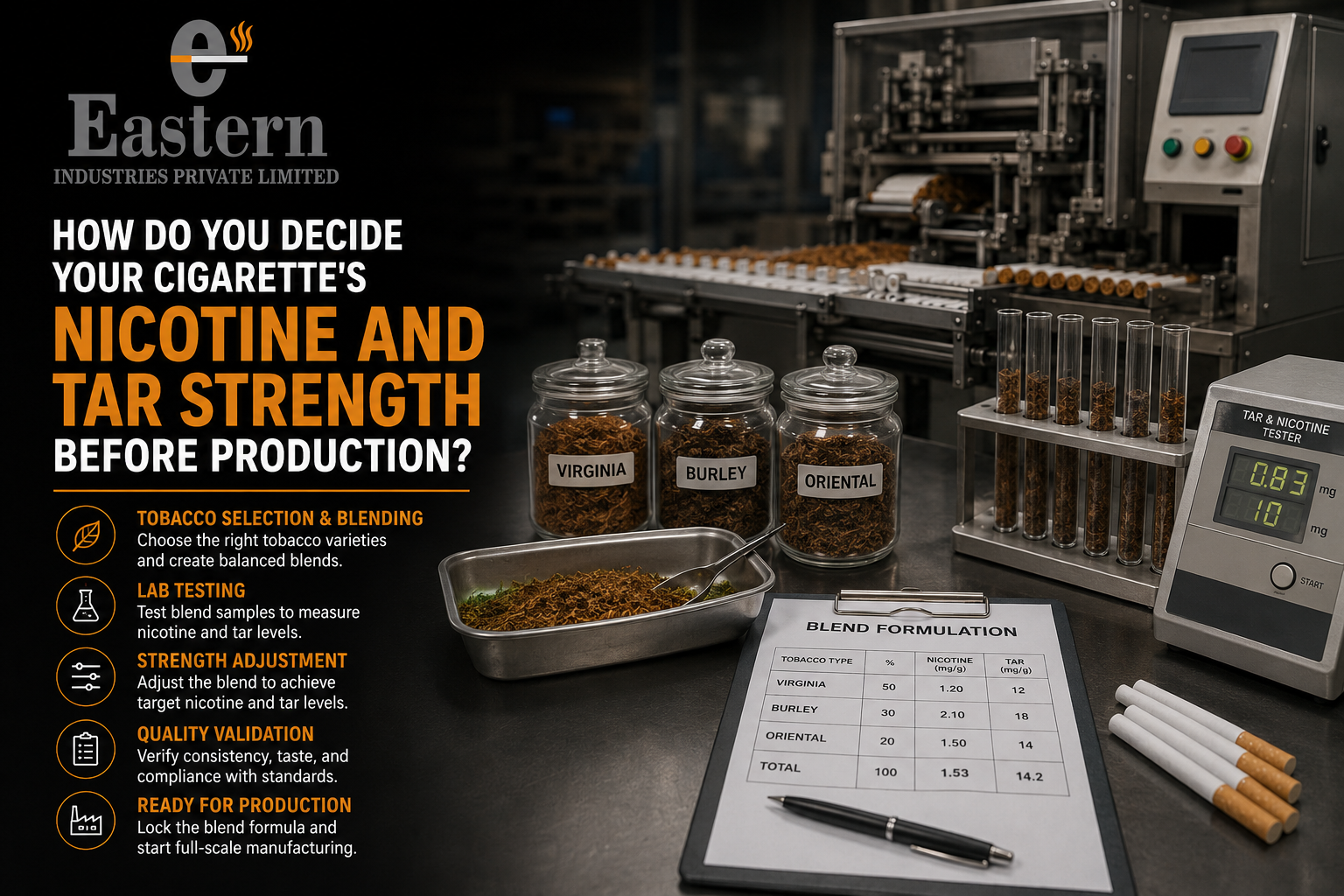
How Do You Decide Your Cigarette's Nicotine and Tar Strength Before Production
Before a single cigarette rolls off the production line, manufacturers face one of the most consequential decisions in the entire development process: setting nicotine and tar strength. This isn’t a cosmetic choice. It shapes how a product is classified, how it’s tested, how it can legally be marketed, and ultimately how consumers experience the brand. Getting cigarette nicotine content right requires balancing consumer expectation, regulatory compliance, and manufacturing precision long before production begins.
These decisions also carry weight because they’re difficult to change later. Once a blend, filter design, and paper specification are locked in and tested, adjusting strength levels can mean reformulating the product from the ground up. That’s why strength decisions belong at the earliest stage of development, not as an afterthought once other specifications are finalized.
Understanding Cigarette Nicotine Content: What It Actually Measures
Nicotine yield is measured using standardized smoking-machine methods, primarily governed by ISO standards such as ISO 3308 and ISO 4387, along with gas chromatographic analysis under ISO 10315. These methods use a machine to puff a cigarette under fixed conditions, typically a set puff volume, duration, and frequency, and then measure how much nicotine is captured in the resulting smoke.
It’s important to understand that this number reflects machine-measured output, not necessarily what an individual smoker actually inhales. Human smoking behavior varies significantly, and factors like puff depth, frequency, and how a smoker holds the cigarette can all influence actual intake. Manufacturers rely on the standardized figure because it provides a consistent, comparable baseline across products, even though it’s understood within the industry to be a reference point rather than a precise measure of individual exposure.
Cigarette Tar Content: The Other Half of the Equation
Tar content, often referred to technically as nicotine-free dry particulate matter, is measured using the same smoking-machine framework. In practice, tar is calculated by subtracting both water content and nicotine content from the total particulate matter collected during testing. Because tar and nicotine are generated together during combustion, they can’t really be set independently. Adjusting one almost always affects the other.
This is why manufacturers typically approach nicotine and tar as a linked specification rather than two separate targets. A change to tobacco blend density or filter ventilation designed to shift nicotine yield will usually move tar yield in a similar direction. Understanding this relationship early prevents costly rework later, when a manufacturer discovers that adjusting one variable to hit a target has thrown the other out of the intended range.
Low Tar Cigarettes: Why Manufacturers Offer Them and Who They’re For
Low tar cigarettes exist primarily because of sustained consumer demand for products positioned as milder or less intense in sensation, along with historical regulatory frameworks that encouraged tar reduction as a public health measure. From a design standpoint, achieving a lower tar yield typically involves a combination of filter ventilation, more porous cigarette paper, and adjustments to tobacco density and blend composition.
It’s worth noting that regulatory bodies in many regions, including the US and EU, have scrutinized how these products are marketed. Machine-measured tar reductions don’t necessarily translate to a proportional reduction in what a smoker actually inhales, since smokers often adjust their behavior to compensate for a lower measured yield. Manufacturers developing a low tar product need to be aware of this history and design their labeling and marketing claims carefully, staying within what regulators currently permit in their target markets.
Light Cigarettes vs Regular: Clearing Up a Common Misconception
The comparison of light cigarettes vs regular is more complicated than it once was. Terms like “light,” “low tar,” and “mild” were widely used for decades to describe cigarettes with lower machine-measured tar and nicotine yields. However, regulators in the United States and European Union have since banned these descriptors on packaging and in advertising, concluding that they created a misleading impression that such products were meaningfully less harmful than standard cigarettes.
As a result, many manufacturers now differentiate these product lines through pack color, design cues, and numerical strength indicators rather than descriptive language. For anyone developing a new product line, this is a critical compliance point. What a product measures as, technically, and how it can be described to consumers, legally, are now two very different considerations that must be addressed separately during development.
Key Factors That Influence Nicotine and Tar Strength Decisions
Several factors shape where a manufacturer ultimately sets strength levels. Target market expectations matter enormously, since consumer preferences for strength vary significantly by region and demographic. Tobacco blend composition, including the ratio of different tobacco types and the inclusion of reconstituted tobacco, directly affects nicotine delivery. Filter design, particularly the presence and placement of ventilation holes, is one of the most controllable variables in the entire process. Finally, regulatory limits in the target market set hard boundaries that no amount of design flexibility can exceed.
Manufacturers typically model these factors together rather than adjusting them one at a time, since changes in one area frequently create ripple effects across the others.
How Tobacco Blend and Filter Design Affect Final Strength
Blend ratio is one of the most direct levers available. Different tobacco types, such as flue-cured, burley, and oriental varieties, naturally carry different nicotine concentrations, and adjusting their proportions shifts the final yield. Filter ventilation works differently, diluting the smoke stream with ambient air as it passes through perforations in the filter and tipping paper, which reduces the concentration of both tar and nicotine per puff under standardized test conditions.
Paper porosity also plays a meaningful role, since more porous paper allows additional air to be drawn through the burning tobacco during a puff, again diluting the smoke. These three levers, blend, filter ventilation, and paper porosity, are usually adjusted together during product development to hit a precise target range rather than relying on any single variable alone.
Regulatory Considerations Before Setting Strength Levels
Regulatory limits vary considerably by region and must be confirmed before finalizing any specification. The European Union, for example, sets maximum yields under its Tobacco Products Directive, while other markets apply their own testing and reporting requirements. Manufacturers need to account for required testing protocols, documentation standards, and labeling rules specific to each market they intend to sell into, since a product compliant in one region may not automatically meet requirements elsewhere.
Aligning Strength Decisions With Brand Positioning
Strength specifications should also connect to the broader brand strategy being built around the product. A brand targeting a value-conscious, high-frequency smoker may prioritize a different strength profile than one positioned toward a premium, lower-intensity segment. For entrepreneurs building a new cigarette brand from the ground up, resources like How to Start Your Own Cigarette Brand: A Step-by-Step Guide for Entrepreneurs can help connect these technical strength decisions to the broader steps involved in launching a compliant, market-ready product.
Testing and Validating Strength Before Full Production
Once a target specification is set, it needs to be validated through consistent lab testing before committing to full-scale production. Small batch runs allow manufacturers to confirm that measured nicotine and tar yields fall within the intended range across multiple production cycles, since natural variation in tobacco leaf and paper stock can shift results slightly from batch to batch. Building in this validation step early helps avoid a costly scenario where a large production run comes back outside the intended specification.
Consistency matters just as much as hitting the initial target. Consumers expect a brand to deliver the same experience pack after pack, so manufacturers typically set internal tolerance ranges tighter than regulatory limits to leave room for natural batch variation without risking non-compliance.
Working With the Right Partner to Finalize Your Specifications
Given the technical and regulatory complexity involved, many brands choose to work with an experienced Private Labeling partner to finalize their nicotine and tar specifications. This approach gives brands access to established formulation expertise, testing infrastructure, and regulatory knowledge that would otherwise take considerable time and investment to build independently, particularly for a first product launch.
Conclusion
Deciding on nicotine and tar strength before production is a technical, regulatory, and strategic decision all at once. It requires understanding how measurement standards work, how blend and filter design interact, and how regional regulations shape what can and can’t be claimed on packaging. Manufacturers who treat this as a foundational step, rather than a detail to finalize later, are far better positioned to bring a compliant, well-differentiated product to market.