
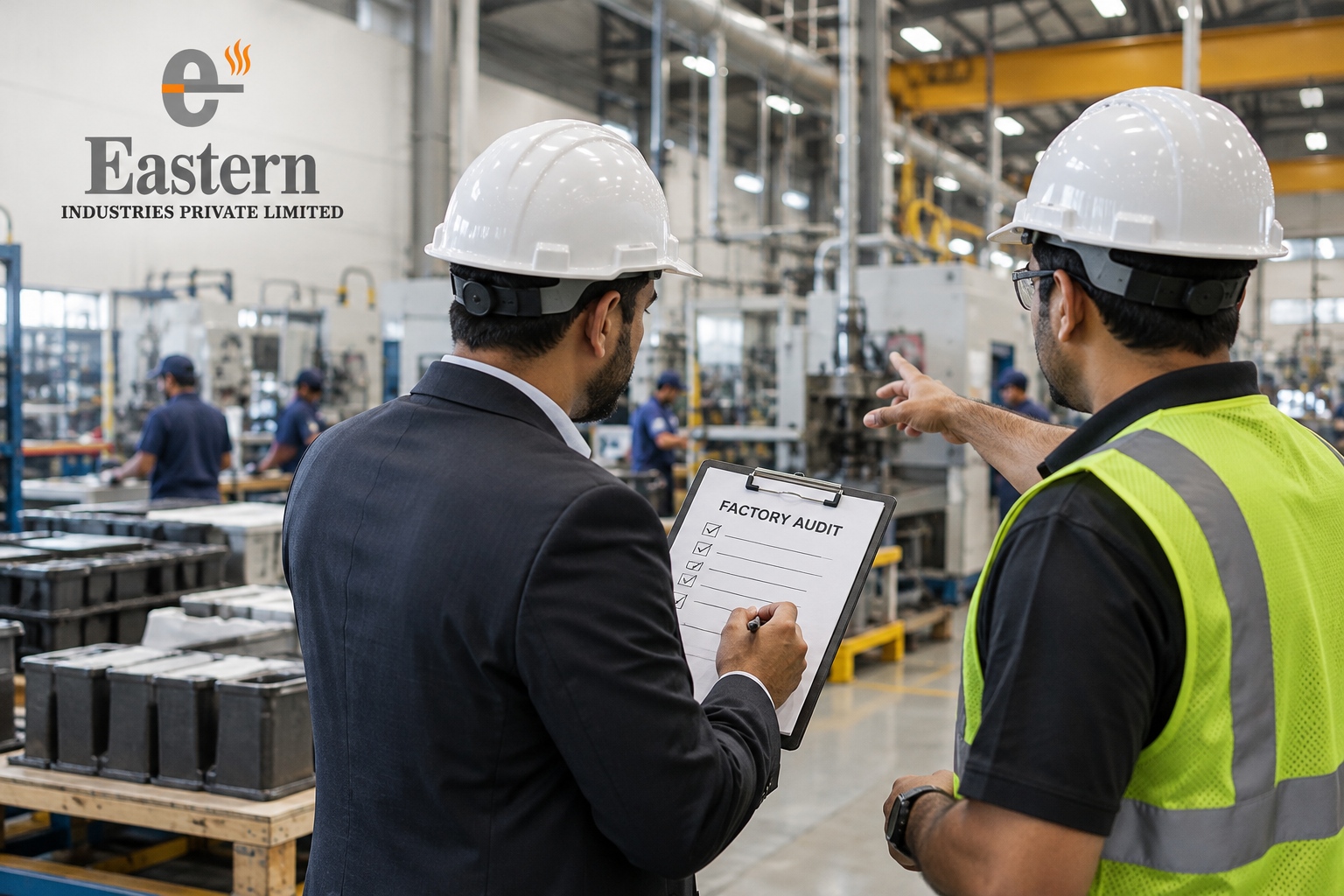
Should You Request a Factory Audit Before Your First Order?
Every importer eventually faces the same decision. The samples look right, the pricing works, the communication has been professional, and the supplier is waiting for a deposit. The only thing standing between you and a first order is whether you verify what you have been told. A tobacco factory audit request feels like an awkward thing to raise at that moment, which is precisely why so many buyers skip it and discover the consequences later. We publish how we handle verification openly on our About Us page, because transparency on this point is part of the relationship. This guide explains what an audit actually tells you, what it costs, and when it genuinely matters.
What a Factory Audit Actually Is
Factory verification is a pre order due diligence process that confirms a supplier’s legal registration, physical existence, manufacturing capability and quality systems before any purchase order is issued.
It is worth separating three terms that buyers often use interchangeably. A desk based verification checks registration documents and corporate records remotely. A factory audit is an on site assessment of capability, systems and compliance. A product inspection checks goods against specification, usually during or after production.
Only the audit answers the question that matters before a first order: can this facility actually produce what it has promised, at the volume agreed, to the standard required? The standard process runs through five stages, moving from desk based registration checks to physical factory confirmation, production capability assessment, quality control system review and certification verification.
Why Tobacco Sourcing Raises the Stakes
Tobacco is not a category where a disappointing first order is simply a commercial setback. Products that fail specification can be rejected at the border, seized for labelling non compliance or rendered unsaleable because the fiscal marking is wrong.
Good Manufacturing Practice is a baseline requirement in the tobacco product industry, and GMP assesses grade facilities by compliance level with minor and major non conformities recorded against them. Documented tobacco GMP failures have included the absence of laboratory testing for nicotine content and incomplete product labelling. Both of those issues become your problem at the destination port, not the manufacturer’s.
Regulatory work on tobacco manufacturing practice draws on established frameworks including ISO 9001:2015 quality management systems and ISO 31000 risk management. If a supplier cannot demonstrate how they meet those principles in practice, that is information you need before you commit capital.
The Risk an Audit Is Designed to Catch
The most common sourcing failure is not poor quality. It is discovering that the company you have been negotiating with does not manufacture anything.
An estimated 30% of suppliers on B2B platforms are trading companies rather than factories. One documented case involved a buyer losing USD 75,000 to a trading company that presented itself as a factory throughout the entire sourcing process.
This matters practically rather than philosophically. A trading company adds margin, controls nothing on the production line, cannot fix quality problems at source, and may switch the underlying factory between orders without telling you. A simple check often exposes it: confirming that the registered company address matches the stated factory location is a surprisingly effective test, because discrepancies here frequently flag intermediaries presenting themselves as manufacturers.
What a Credible Audit Should Examine
A pre order factory inspection should cover four areas at minimum.
Legal standing means verifying registration documents, licence validity, the authorised scope of business and export permissions. The authorised scope and registered capital often reveal whether a company is genuinely a manufacturer or a trading operation.
Production capability means assessing whether the facility has the equipment, workforce and capacity to make your product to specification, on time and at volume. A competent auditor compares the supplier’s declared capacity against what is actually observed on site, which is where exaggeration surfaces.
Quality control systems means reviewing incoming, in process and final quality control, operator training, equipment calibration and traceability records. Certificates on a wall prove very little; the operating records behind them prove a great deal.
Export compliance means confirming the facility can meet the specific requirements of your destination market, including labelling, fiscal marking and documentation.
What an Audit Costs and How Long It Takes
Third party audit work is priced per man day, meaning one auditor on site for one working day including travel, sampling and a written report.
Rates commonly fall between USD 200 and USD 350 per man day, with factory audits specifically ranging from around USD 210 to USD 290. Published examples span from roughly USD 188 per man day for a simple assessment to USD 238 for a more extensive one, with other providers quoting USD 280 per man day across Asia, USD 398 with no additional travel charge in key regions, and premium models reaching USD 900 and above depending on geography.
On duration, a basic Factory Verification Audit typically takes one man day and suits straightforward supplier qualification. A Factory Technical Audit requires around two man days to review the quality management system properly. Sites under 500 workers are often covered in one man day, with larger facilities requiring two.
Set that figure against the deposit it protects and the calculation usually answers itself.
When an Audit Is Worth It and When It Is Not
Verifying a manufacturer facility is not automatically necessary for every transaction, and pretending otherwise is unhelpful.
An audit is clearly justified when the order value materially exceeds what you could comfortably write off, when you intend to build a repeat supply relationship, when the product carries regulatory exposure at the destination, when you have no verifiable references from comparable buyers, or when anything in the sourcing process has not reconciled cleanly.
An audit is harder to justify for a small trial order from a supplier already verified by a party you trust, or where you can structure payment so your exposure stays minimal until goods are confirmed. In those cases a desk based verification often delivers the proportionate answer. Importers mapping out a complete vetting sequence will find this guide on B2B Tobacco Sourcing: How Importers Vet Suppliers Before Placing Orders a useful companion to the audit decision itself.
How Suppliers Respond Tells You Almost Everything
Here is the most useful thing about raising a factory audit request: the response is itself data.
Established manufacturers expect due diligence. Many prefer it, because an audited relationship reduces disputes later and tends to produce better briefed buyers. Serious suppliers such as Eastern Tobacco generally treat an audit as a normal part of onboarding rather than an accusation.
Refusal, evasion or insistence on full payment before any verification is a recognised red flag across sourcing practice. So are related signals: a bank account that does not match the registered company name exactly, a request to pay a personal account, or a sudden change of banking details mid negotiation.
You do not need to be confrontational about it. Ask plainly whether the facility can accommodate a third party audit before the first production run. A confident manufacturer will give you a date.
If a Full Audit Is Not Practical
When budget or timing rules out an on site visit, run a structured remote verification rather than nothing at all.
Request business registration documents and verify them against the issuing registry. Confirm the registered address matches the production site. Ask for export documentation from previous shipments to markets comparable to yours. Request a video walkthrough of the production line, unscripted and on a date you choose. Ask for references from buyers in similar markets and speak to one or two directly about how long they have worked with the supplier and where its weaknesses lie.
Then structure payment to match your confidence level, with a modest deposit and the balance against inspection or shipping documents rather than against trust.
Turning Findings Into Contract Terms
An audit report that sits in a folder achieves very little. The value comes from converting findings into contractual obligations.
If the audit identified corrective actions, specify them in the agreement with deadlines and a re audit trigger. Write the verified production capacity into the contract so capacity disputes have a documented baseline. Name the specific facility that will produce your goods and require written consent before any subcontracting. Tie final payment to inspection results rather than to shipping alone.
Final Thoughts
A factory audit before committing is rarely about suspecting dishonesty. It is about replacing assumptions with documented facts at the one moment when you still have full leverage, which is before the deposit leaves your account. Weigh the cost against your order value, pay attention to how the supplier responds to the request, and turn whatever you learn into terms that hold. Buyers who do this consistently are not the ones writing off first orders.