
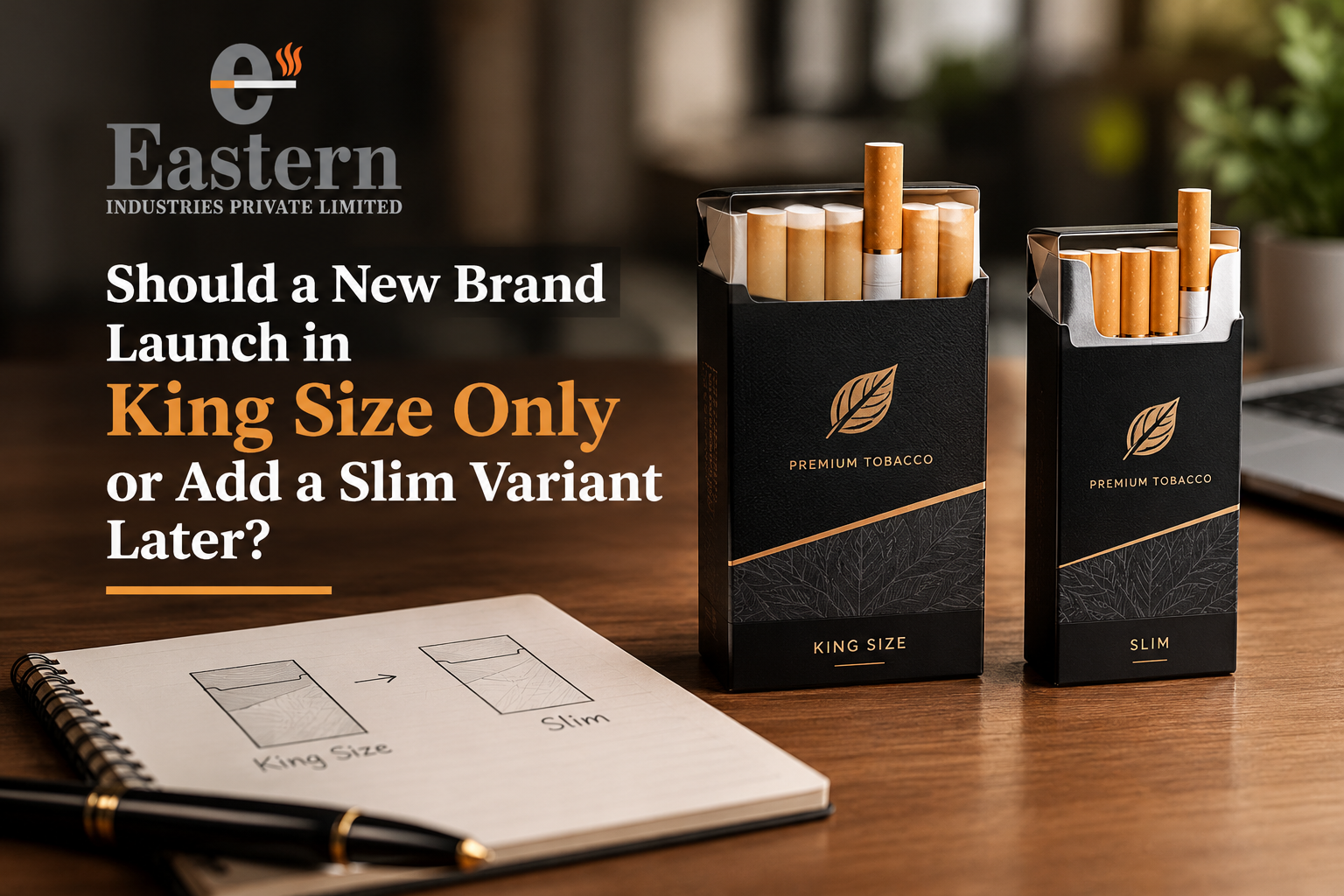
Should a New Brand Launch in King Size Only or Add a Slim Variant Later?
Launching a cigarette brand involves several important decisions, and choosing the right product format is one of them. Brand owners must consider manufacturing requirements, production costs, inventory management, and the regulations of their intended markets before finalizing their product range. A well-planned cigarette format launch strategy helps businesses understand the financial and operational implications of introducing one or multiple cigarette formats. Manufacturers evaluating different product specifications can explore Premium Quality Cigarettes to review available manufacturing formats and discuss technical requirements. This article examines whether launching with king size cigarettes alone or introducing a slim variant later offers a more manageable approach for a new brand.
Why Cigarette Format Selection Matters for a New Brand
Cigarette format selection affects several aspects of manufacturing, from equipment requirements to packaging specifications and production planning. Different formats require particular dimensions, filters, packaging materials, and quality control procedures, making the decision more complex than choosing a product size.
For a new brand, introducing multiple formats can increase the number of production specifications and inventory categories that must be managed. Each variation may require separate manufacturing arrangements, packaging components, and compliance documentation.
These differences can influence initial investment requirements and ongoing operational expenses. Brand owners should therefore evaluate format selection as part of their broader manufacturing and financial planning.
A structured cigarette format launch strategy allows businesses to compare available options against production capabilities, budget limitations, and regulatory obligations before committing to manufacturing agreements.
Understanding the Differences Between King Size and Slim Cigarettes
King size and slim cigarettes differ primarily in their physical dimensions. These differences affect manufacturing specifications, equipment compatibility, and packaging requirements.
King size cigarettes commonly measure approximately 84 millimeters in length, with a circumference of around 24 to 25 millimeters. Slim cigarettes feature a narrower circumference, although exact measurements vary depending on the manufacturer and intended market.
The dimensional differences can influence filter specifications, cigarette making equipment, packaging machinery, and inspection requirements. Manufacturers may need format-specific components or machine adjustments to accommodate narrower products.
Format names alone should not be treated as universal manufacturing standards. Brand owners should confirm the required length, circumference, filter dimensions, and packaging configuration directly with their production partners.
Documenting these measurements helps prevent misunderstandings during sample development and provides a clear technical foundation for comparing different manufacturing options.
What Are the Advantages of Launching With a Single Cigarette Format?
Launching with a single cigarette format can simplify several operational responsibilities during the initial manufacturing stage. Instead of managing different product specifications, a business can concentrate on one production configuration and its associated packaging requirements.
A single-format approach may reduce the number of manufacturing changeovers, packaging materials, and inventory categories requiring attention. It can also make initial quality documentation and production scheduling easier to coordinate.
Another potential advantage is greater visibility into production expenses. With fewer variations, businesses may find it easier to identify manufacturing costs, material requirements, and operational inefficiencies.
However, beginning with one format does not automatically guarantee lower total costs. Actual savings depend on the manufacturer’s equipment, order quantities, material sourcing arrangements, and available production capacity.
For businesses assessing initial operational complexity, a single-format launch provides a comparatively straightforward manufacturing structure.
When Does a Multi Format Launch Make Financial Sense?
Introducing king size and slim cigarettes simultaneously creates additional manufacturing and inventory considerations. Each format may require separate production specifications, packaging components, material procurement, and quality checks.
A multi-format arrangement may be financially manageable when the manufacturer already operates equipment capable of handling both configurations and can accommodate the required production schedules.
However, businesses should evaluate whether the additional setup expenses, minimum order quantities, and storage requirements fit within their available budget.
The financial implications also depend on production volumes and how frequently equipment must be adjusted between formats. Smaller production batches can increase the relative cost of setup and changeover activities.
Before committing to multiple formats, brand owners should request detailed manufacturing estimates that distinguish shared expenses from format-specific costs.
A realistic financial assessment is more useful than assuming that a larger initial product range will automatically produce stronger commercial results.
Key Factors to Consider Before Adding a Slim Variant
Introducing a slim variant involves technical, financial, and regulatory considerations that should be evaluated before approving an additional production specification.
Manufacturers need to determine whether existing equipment can accommodate the narrower format or whether dedicated machinery, tooling, or adjustments are necessary. Packaging compatibility, filter dimensions, production tolerances, and material requirements also need consideration.
Regulatory requirements are equally important. Depending on the destination market, a new cigarette variant may require separate product notifications, documentation, packaging approvals, or other compliance measures.
Brand owners should also calculate the additional inventory commitments associated with producing and storing another format.
For a detailed explanation of dimensions and technical specifications, consult Cigarette Sizes and Dimensions: A Complete Format Guide for Brand Owners before finalizing manufacturing requirements.
Understanding these factors helps businesses evaluate the practical implications of introducing another product configuration.
How Production Costs and Minimum Order Quantities Affect Format Decisions
Manufacturing costs and minimum order quantities are important considerations when comparing single-format and multi-format production arrangements. These expenses vary depending on production facilities, equipment configurations, packaging materials, and manufacturing agreements.
A minimum order quantity represents the smallest production volume a manufacturer is willing to accept under specific commercial terms. Requirements may differ between king size and slim products because the formats can involve different components, machinery arrangements, and material procurement commitments.
Producing multiple formats may also increase setup costs, packaging inventory, warehousing requirements, and quality inspection expenses.
When evaluating quotations, businesses should request a breakdown of manufacturing charges, tooling expenses, packaging requirements, and any additional costs related to format changes.
It is also important to distinguish one-time setup expenses from costs that recur with every production batch.
Understanding these financial commitments provides a clearer picture of the investment associated with each manufacturing arrangement.
Understanding a Phased Cigarette Format Rollout Strategy
A phased format rollout allows a new brand to separate its initial production requirements from potential future product configurations. Rather than introducing every format simultaneously, manufacturing arrangements are reviewed and expanded at different stages.
The king size first, slim later approach is one example of this production planning structure. It allows the initial manufacturing agreement to focus on one format while leaving the possibility of evaluating additional specifications later.
However, future expansion should not be assumed to be simple or inexpensive. Introducing another format can require new production assessments, packaging arrangements, equipment modifications, and regulatory reviews.
Businesses considering a phased format rollout should confirm whether their manufacturing agreements allow for future specification changes and how additional setup charges would be calculated.
Clear documentation of technical requirements, contractual responsibilities, and potential expansion costs supports more realistic long-term planning.
Common Mistakes to Avoid When Planning Cigarette Formats
One common mistake is selecting cigarette formats without confirming the exact manufacturing specifications. Descriptions such as king size or slim may differ between markets, making written dimensional requirements essential.
Another mistake is comparing manufacturing quotations without checking which expenses are included. A lower initial quotation may exclude tooling, packaging development, testing, or additional quality inspections.
Businesses may also underestimate the complexity of managing multiple inventory categories. Every additional format can create separate requirements for production scheduling, storage, documentation, and material procurement.
Overlooking regulatory obligations is another significant concern. Packaging rules, product registration requirements, health warnings, and permitted cigarette specifications vary by jurisdiction.
Finally, brand owners should avoid making decisions based on assumptions about the relative safety of different cigarette formats. Slim cigarettes are not a safer alternative to conventional cigarettes.
Careful technical and regulatory evaluation can prevent avoidable complications during manufacturing arrangements.
How to Evaluate Single Format vs Multi Format Launch Options
Comparing a single format vs multi format launch requires a structured assessment of manufacturing capabilities, financial commitments, and compliance requirements.
Begin by establishing the total cost of each option, including production setup, packaging components, quality control, inventory storage, and transportation. Identify any costs that would apply only when introducing an additional format.
Next, review the manufacturer’s technical capabilities. Determine whether the facility has suitable equipment for both formats and whether production changes would involve additional tooling or extended downtime.
Businesses should also examine contractual terms, minimum order quantities, and the flexibility available for future production adjustments.
Regulatory requirements must be considered independently for every intended market and product configuration.
The most appropriate arrangement depends on documented manufacturing capabilities, available resources, and the complexity a business can manage. Neither approach guarantees profitability or commercial success.
Final Thoughts
Choosing between a king size only launch and introducing a slim variant later requires careful consideration of manufacturing requirements, operational complexity, and financial commitments.
A single-format arrangement can simplify initial production planning, while manufacturing multiple formats introduces additional specifications, inventory responsibilities, and potential setup expenses. A phased approach may allow these decisions to be evaluated separately, although future modifications can involve significant costs.
Eastern Tobacco offers cigarette manufacturing capabilities covering different product formats. Businesses assessing production requirements can review technical specifications, manufacturing arrangements, and applicable quality standards before entering into contractual agreements.
Ultimately, an effective cigarette format launch strategy depends on accurate cost assessments, clear production specifications, qualified manufacturing partners, and compliance with the requirements of the intended markets.