
What Packaging Rules Apply Specifically to Menthol Variants
Few segments of the tobacco category have faced as much regulatory scrutiny in recent years as menthol. What started as a flavor preference has become one of the most closely watched policy battlegrounds in tobacco control, and the menthol cigarette ban conversation now shapes packaging requirements in dozens of markets around the world. For manufacturers and exporters, this isn’t an abstract policy debate. It has direct, practical consequences for labeling, descriptor use, and pack design.
Understanding these rules matters because menthol regulation doesn’t follow a single global standard. Some countries have banned the flavor entirely, others restrict specific descriptors or ingredients, and some markets still permit menthol without meaningful packaging distinction. Getting this wrong can mean rejected shipments, compliance penalties, or products pulled from shelves after distribution has already begun.
Understanding the Global Momentum Behind Menthol Cigarette Ban Efforts
Menthol has drawn distinct regulatory attention for a specific reason: research consistently links it to easier smoking initiation and greater difficulty quitting, since the cooling sensation masks the harshness of tobacco smoke. This has made it a priority target separate from other flavor additives in many jurisdictions. The European Union banned menthol as a characterizing flavor in cigarettes and roll-your-own tobacco in May 2020, and the United Kingdom retained that ban after leaving the EU. Canada, Brazil, Ethiopia, and several other countries have implemented their own national bans using varying legal mechanisms.
In the United States, the picture is more fragmented. The FDA proposed a federal menthol ban in 2022, but that rule was formally withdrawn in January 2025, meaning menthol remains legal at the federal level. However, states including Massachusetts and California, along with roughly 170 additional US cities and localities, maintain their own menthol restrictions. This patchwork creates real complexity for any manufacturer selling across multiple US jurisdictions.
Menthol Flavor Restriction Packaging: What Changes on the Pack
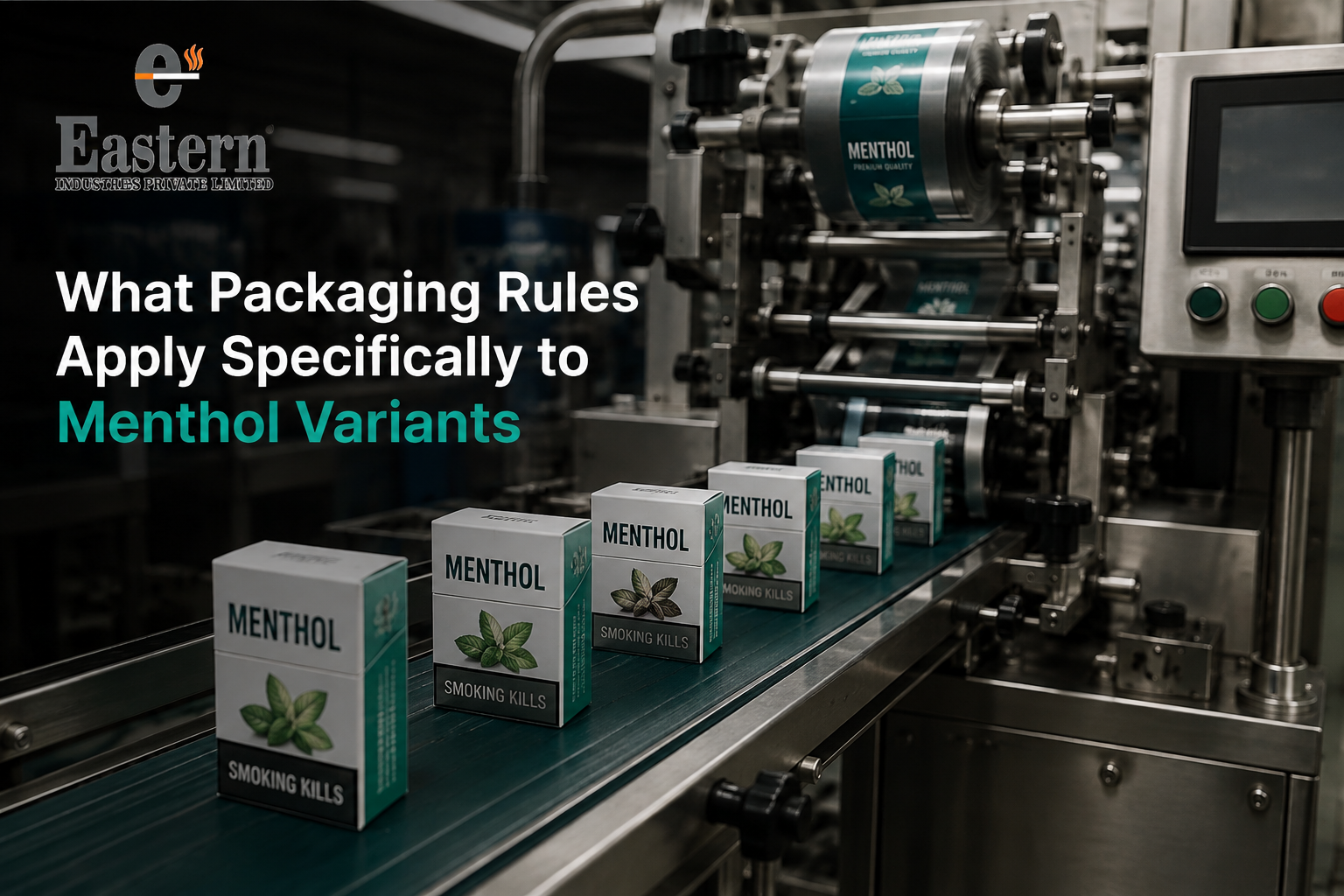
Where menthol remains legal, menthol flavor restriction packaging requirements often go beyond what applies to standard cigarette variants. In many regions, manufacturers can no longer use overt flavor descriptors like “menthol,” “mint,” or “cool” on packaging if regulators consider them likely to mislead consumers about the product’s characteristics or appeal to youth. This has pushed many brands toward indirect visual cues instead, such as green or blue color coding, to signal the variant without relying on restricted language.
Capsule-based menthol products, where a crushable capsule inside the filter releases menthol flavor on demand, face additional disclosure requirements in several markets. Regulators increasingly require these capsules to be clearly indicated on packaging so consumers understand the product’s mechanism before purchase. Getting this labeling wrong isn’t a minor technicality. In markets with active enforcement, it can trigger product recalls or distribution holds.
Menthol Regulation by Country: A Region-by-Region Snapshot
Menthol regulation by country varies enough that manufacturers need a market-specific compliance checklist rather than a single global standard. In the European Union and United Kingdom, menthol cigarettes are banned outright under characterizing-flavor rules, meaning no detectable menthol taste or smell is permitted regardless of how the product is labeled. Canada and Brazil take an even stricter approach, banning the menthol additive itself rather than just its perceptible presence.
In the United States, menthol remains federally legal but subject to a growing patchwork of state and local bans. Countries including Japan, Russia, and much of Asia, Africa, and the Middle East continue to permit menthol sale with comparatively fewer restrictions. This range, from total prohibition to unrestricted sale, means exporters need to verify current rules for every individual market rather than assuming consistency across regions with otherwise similar tobacco regulations.
Full Bans vs Partial Restrictions: Understanding the Difference
It’s worth drawing a clear distinction between two regulatory models that often get conflated. A full ban, as seen in Canada and Brazil, prohibits the menthol additive from being present in the product at all, regardless of concentration. A characterizing-flavor ban, used by the EU and UK, instead prohibits the flavor from being detectable to a reasonable consumer, which technically allows trace additive presence as long as it doesn’t create a perceptible menthol taste or smell.
This distinction matters enormously for compliance testing. A product that passes muster under a characterizing-flavor standard could still violate a full additive ban if shipped into a market like Canada. Manufacturers exporting across multiple regions need to test against the strictest applicable standard for each destination rather than relying on a single formulation and packaging approach across all markets.
Menthol Variant Compliance: What Manufacturers Must Verify Before Distribution
Before distributing a menthol product into any market, menthol variant compliance requires manufacturers to confirm several things. First, whether the destination market permits menthol at all, and if so, under which regulatory model. Second, whether specific descriptors, colors, or design elements are restricted on packaging. Third, whether capsule or delivery mechanism disclosures are required. Fourth, whether local or regional-level restrictions exist beneath the national law, as is increasingly common in the US.
Documentation matters just as much as the product formulation itself. Regulators in markets with active enforcement frequently request testing records and ingredient disclosures during customs clearance or retail audits, so manufacturers should maintain this paperwork proactively rather than assembling it reactively after a compliance question arises.
Packaging Design Considerations Unique to Menthol Products
Beyond descriptor restrictions, menthol packaging often carries unique design constraints tied to health warning placement and overall pack presentation. In markets with plain packaging requirements, menthol variants may be distinguished only through minimal, regulator-approved means, such as a small color band or variant name in standardized typography, rather than the more expressive branding once common in this category.
Manufacturers should also account for how warning label real estate interacts with variant identification. When health warnings occupy a large percentage of pack surface, as required in many jurisdictions, there’s limited room left to communicate variant information, which makes design efficiency and regulatory precision equally important during the packaging development process.
How Menthol Rules Intersect With Broader Packaging Compliance
Menthol-specific rules don’t exist in isolation. They sit within a broader framework of pack labeling, warning requirements, and market access rules that apply to cigarettes generally. Exporters managing multiple product lines across different regions often find it useful to review resources like Cigarette Packaging Regulations by Market: What Exporters Must Know in 2026, which lays out the wider compliance landscape that menthol-specific rules operate within.
Staying Ahead of Shifting Menthol Regulations
Given how actively menthol policy continues to shift, particularly in the United States where the federal picture remains unsettled even as local bans expand, manufacturers should treat compliance monitoring as an ongoing process rather than a one-time check. Regulatory changes can move quickly, and a market that permits menthol today may not tomorrow. Building a routine review process into product management, rather than waiting for a compliance issue to surface, protects both market access and brand reputation.
Getting Compliance Right With the Right Manufacturing Partner
Navigating menthol-specific packaging requirements across multiple markets is rarely something brands manage well without specialized support. Working with an experienced Cigarette Packing partner gives manufacturers access to up-to-date regulatory knowledge and production flexibility needed to adapt packaging quickly as menthol rules continue to evolve across different regions.
Conclusion
Menthol packaging compliance sits at the intersection of shifting public health policy, inconsistent global regulation, and precise labeling requirements. From descriptor restrictions to capsule disclosure rules to the fundamental difference between full and characterizing-flavor bans, manufacturers need a market-by-market approach rather than a single global template. Brands that build this diligence into their process from the start are far better positioned to maintain access across the patchwork of rules that now define this category.