
5 Steps to Starting Your Own Cigarette Brand from Scratch
Here is something most people get wrong about the tobacco industry. They assume it is a closed club. That the brands sitting behind every counter have been there forever and will stay there. Some will. But the market is more open than it looks, especially at the regional and private label level where new brands launch quietly every year and build real distribution without anyone at a global corporation ever noticing.
If you have been seriously thinking about how to start a cigarette brand as a business, this guide is for you. Not the version that makes it sound simple, and not the one that makes it sound impossible. The honest five-step version, covering what actually matters at each stage and what to watch for before you commit to anything.
Is It Possible to Launch Your Own Cigarette Brand?
Yes, and more often than the industry publicly admits. Contract manufacturing and private labeling have genuinely changed the entry equation. You do not need a factory. You do not need decades of tobacco experience. What you need is a clear product vision, a market worth entering, and a manufacturer capable of bringing your brand to life without you building infrastructure from scratch. Distributors and importers across Asia, Africa, and the Middle East have been doing exactly this for years. The model works. The question is whether you are prepared enough to give it a real shot.
Step 1: Market Research and Target Audience
Every brand that fails skipped this step or treated it as a box to tick. The cigarette market is not one thing. It has dozens of separate segments shaped by geography, income level, smoking culture, and format preference. A brand built for an urban market in Southeast Asia is a completely different animal from one targeting value-driven buyers in East Africa.
Before you pick a name or finalise a blend, spend real time understanding the specific market you want to own. Which segments are underserved? Which price points are already crowded? What do local smokers want that they are not getting? The answers live in solid research. Everything built on weak foundations eventually shows the cracks.
Step 2: Choose Your Tobacco Blend and Cigarette Type
The blend you choose determines how your cigarette smokes and whether someone comes back to buy it again. Virginia leaf brings natural sweetness and a lighter character. Burley adds body and depth. Oriental leaf introduces aromatic complexity that certain markets respond to strongly. Most commercial blends combine all three, and the ratios are what separate one brand’s character from another.
Format carries real weight alongside the blend. The decision between your soft pack and hard pack options is not just structural. It signals positioning to the consumer before the first cigarette is even pulled from the pack. King size, super slim, menthol, standard, each one tells a story about who the brand is for. Make sure that story genuinely matches what your market research showed you.
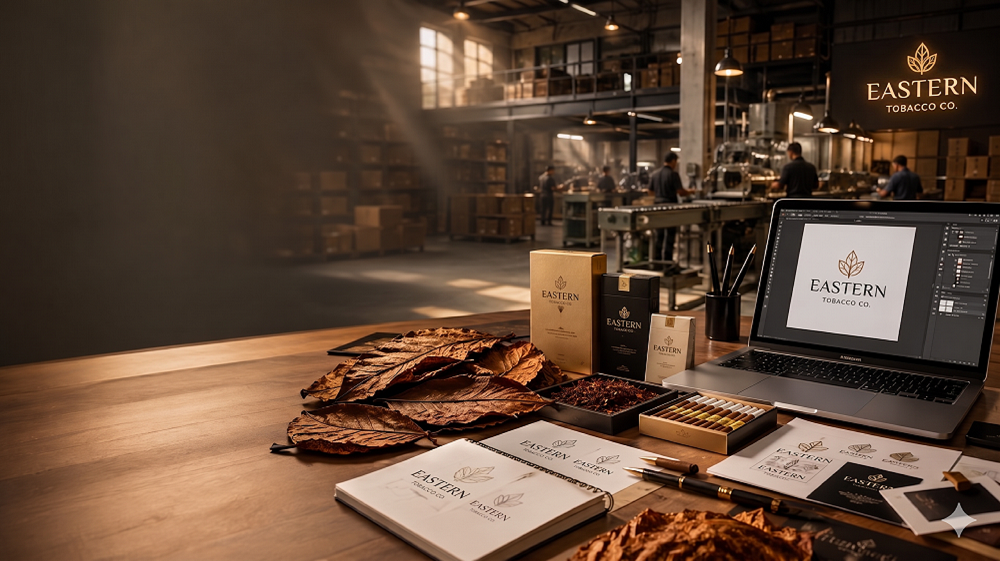
Step 3: Design Your Packaging and Brand Identity
The pack is your entire marketing department in most markets. No billboards, no prime-time television, tightly restricted digital advertising. What sits on the counter or the shelf is the only pitch your brand makes to a new buyer, often in under three seconds.
Do not cut corners here. Work with a designer who knows tobacco packaging regulations because requirements around health warnings, font sizes, and imagery vary significantly by country. A compliance issue discovered after production is a painful lesson. Get it right from the start and your packaging works hard in every market from day one.
Step 4: Partner with a Contract Manufacturer
Of all five steps, this one carries the most weight. Your manufacturer sets your quality ceiling, your production consistency, your lead times, and your ability to scale. A poor choice at this stage creates compounding problems that follow the brand into every new market it tries to enter.
Working with established contract manufacturing services means your capital goes into building the brand rather than building a facility. A good partner handles leaf sourcing, blending, rolling, and packaging while you stay focused on distribution and commercial growth.
Step 5: Compliance, Licensing and Export Considerations
Tobacco is one of the most tightly regulated consumer product categories in the world. Import licensing, health warning mandates, tax stamp obligations, and additive restrictions all differ by destination country. Getting any of it wrong early means delays and costs a new brand simply cannot absorb.
A manufacturer operating inside an export free zone removes a meaningful amount of that friction. Duty structures are simpler, documentation is more streamlined, and established freight routes reduce unwanted surprises. Sort your compliance requirements before production begins. Changing specifications mid-run costs far more than getting it right upfront.
What to Ask Before Signing with a Manufacturer?
Before signing anything, ask these directly. What are minimum order quantities and how do they flex as volumes increase? What does quality control look like at each stage of production? Can you visit the facility before committing? What is a realistic lead time from order to delivery? Does the manufacturer have proven export experience in your specific target market? A manufacturer worth working with answers all of these without hesitation. Vagueness on any of them is a signal worth taking seriously regardless of how attractive the pricing looks.
How Eastern Tobacco Helps New Brands Launch Faster?
Eastern Tobacco has helped brand owners across the UAE, Africa, and Southeast Asia go from concept to shelf-ready product without the delays that come from juggling multiple vendors. As a trusted cigarette manufacturer in Pakistan operating inside the Karachi Export Free Zone, the company manages leaf sourcing, blending, manufacturing, private labeling, and export logistics as one integrated service.
For a new brand, integration matters more than it sounds. Every hand-off between separate vendors is a point where timelines slip and nobody clearly owns the problem. One partner who controls the full process from raw leaf to finished shipment gives you speed and accountability that fragmented vendors simply cannot match.
Conclusion
How to start a cigarette brand is not about finding shortcuts. It is about doing the right things in the right sequence and not skipping what feels inconvenient. The entrepreneurs who build brands worth owning treat each of these five stages with seriousness and choose their manufacturing partner the way they would choose a business partner. The market is genuinely open. What you bring to it is what decides how it goes.