
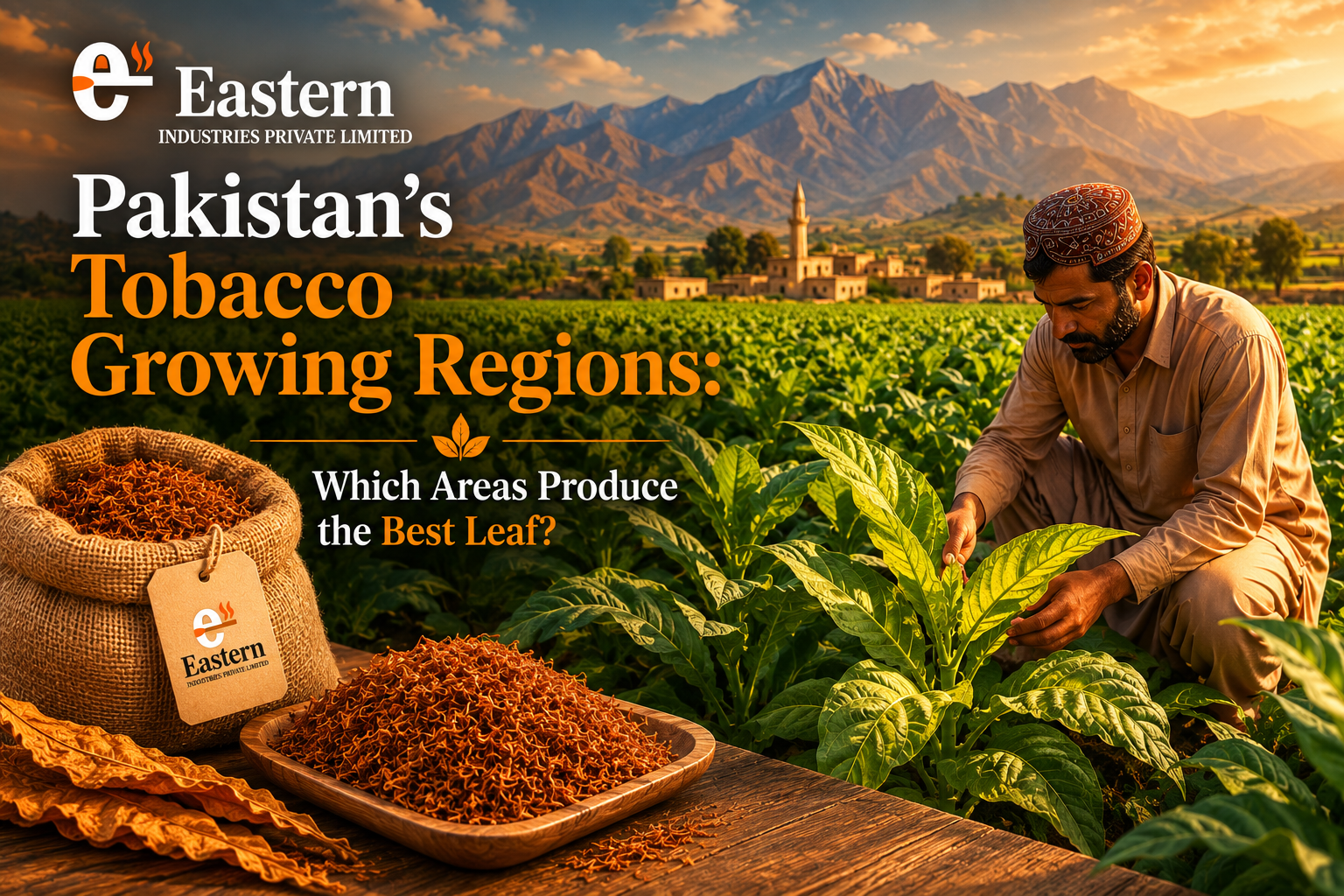
Pakistan's Tobacco Growing Regions: Which Areas Produce the Best Leaf?
Pakistan does not appear in the first conversation most international buyers have about tobacco origins. Brazil comes up. Zimbabwe comes up. The United States has a history that makes it impossible to ignore. But quietly, across a concentrated belt of land in the country’s northwest, Pakistan has been producing tobacco leaf for well over a century. The buyers who have sourced from these Pakistan tobacco growing regions know something that buyers still relying on traditional origins are only beginning to discover. The leaf quality coming out of Khyber Pakhtunkhwa is not a compromise option. In the right grades and the right formats, it competes directly with origins that cost considerably more to source from.
Why Geography Shapes Leaf Quality
Tobacco is one of those crops where the growing environment leaves a direct fingerprint on the finished product. Soil composition, altitude, rainfall patterns, and seasonal temperature variation all influence how the leaf develops, how it cures, and ultimately how it performs in a blend. Two fields planted with identical seed in different locations will produce noticeably different leaf, and experienced buyers who understand origin characteristics can identify that difference without being told where the leaf came from.
The Pakistan tobacco growing regions concentrated in Khyber Pakhtunkhwa benefit from a specific combination of well-drained sandy loam soils, warm growing seasons with sufficient rainfall, and cooler post-harvest conditions that support effective curing. That combination is not accidental. It is the same set of environmental factors that makes Virginia tobacco thrive in its original growing regions, and it is why Pakistani flue-cured leaf carries the clean combustion profile and moderate nicotine character that blenders associate with good base leaf.
Khyber Pakhtunkhwa: The Heart of Pakistani Tobacco
KPK accounts for the overwhelming majority of Pakistan’s total tobacco output. Within the province, production is concentrated across several districts that have developed distinct reputations among buyers familiar with the origin. Understanding the differences between these districts helps explain why leaf from the same province can vary in character and why sourcing decisions within KPK are not interchangeable.
Mardan
Mardan tobacco is the most widely recognised name in Pakistani leaf trading. The district has the largest cultivation area in the province and the longest commercial growing history, which means its growers have accumulated generational knowledge about managing the crop through the specific conditions the region presents. Mardan leaf tends to produce a bright, relatively light flue-cured character with good colour uniformity across well-managed crops. It is the district that most international buyers encounter first when sourcing Pakistani tobacco, and for many it remains the default reference point for what Pakistani FCV leaf looks and performs like.
The scale of production in Mardan also means the district supports a more developed processing and trading infrastructure than smaller growing areas. Threshing facilities, leaf dealers, and export-oriented processors are more concentrated here than anywhere else in the province, which makes it the most accessible entry point for buyers building a sourcing relationship with Pakistani suppliers for the first time.
Swabi
Swabi tobacco leaf sits adjacent to Mardan and shares many of the same soil and climate characteristics, but buyers who source from both districts consistently report subtle differences in the finished leaf. Swabi leaf tends to carry slightly more body than Mardan at comparable grade levels, which makes it a preferred choice for blenders who want a base leaf with more structural weight without moving into Burley territory. The combustion profile remains clean and the nicotine character stays moderate, but the physical density of the leaf gives it a different role in blend construction than the lighter Mardan character.
For manufacturers building blends where fill weight efficiency matters, the additional body in Swabi leaf has a practical production benefit beyond the flavour profile. Denser leaf compresses more consistently under filling machine parameters and produces a more uniform rod density across a production run, which reduces the variability in draw resistance that lighter leaf blends can sometimes introduce.
Charsadda and Surrounding Districts
Beyond Mardan and Swabi, districts including Charsadda contribute to the overall domestic tobacco supply from KPK with leaf that varies in quality depending on the specific growing conditions of a given season. Charsadda production tends to be used for lower-to-mid grade blends where consistency within a grade range is more important than the peak quality characteristics that premium grade Mardan and Swabi leaf can deliver. It fills a commercial role in the supply chain that matters for manufacturers producing across multiple price points rather than exclusively at the premium end.
What Makes KPK Leaf Distinctive Compared to Other Origins?
International buyers evaluating best tobacco leaf Pakistan against comparable origins from Zimbabwe, Brazil, or India consistently identify a few characteristics that stand out. The natural sugar content of well-grown Pakistani FCV sits in a range that produces a clean, light smoke character without requiring heavy casing to achieve palatability. That is a meaningful advantage in blend construction because it reduces the casing burden on the manufacturer and leaves more room for top dressing to build the aromatic profile the brand is targeting.
The lamina to stem ratio in premium grade Pakistani leaf is also competitive with the better-performing grades from traditional origins. Buyers who have transitioned part of their sourcing to Pakistani leaf after years of sourcing exclusively from Zimbabwe or Brazil often comment that the processing yield per kilogram surprises them positively, particularly when sourcing from processors who have invested in proper threshing equipment rather than handling the separation manually.
Understanding how the leaf is graded and documented is essential for buyers making that sourcing transition. The detail on tobacco leaf quality standards and certification covers the grading framework that applies to Pakistani leaf and what each classification means in terms of practical blend performance.
Seasonal Factors and Crop Variability
Pakistani tobacco is predominantly a single-crop-per-year production system, with planting happening in early spring and harvest running through the summer months. That seasonal concentration means supply availability is not evenly distributed across the calendar year and buyers who plan their procurement without accounting for crop timing can find themselves sourcing from older inventory rather than fresh crop when timing misaligns.
Crop quality varies year to year based on rainfall distribution during the growing season. A season with well-timed rainfall during the vegetative growth period and dry conditions during harvest and curing tends to produce higher average grade output across the province. A season with late rains during harvest creates curing challenges that push more production into lower grades. Buyers with established supplier relationships in KPK get advance visibility on expected crop quality that buyers sourcing through intermediaries rarely receive until the leaf is already processed and graded.
Eastern Tobacco’s Sourcing from Pakistani Growing Regions
Eastern Tobacco sources its leaf directly from KPK tobacco farms across the primary growing districts, with procurement focused on grades that consistently perform within the specification ranges required for both domestic production and international export. Direct farm sourcing rather than purchasing through multiple dealer layers gives Eastern Tobacco better visibility on crop quality ahead of the harvest and more control over the conditioning and processing standards applied to the leaf before it reaches the production facility.
For international buyers who want to source processed leaf from a supplier with established growing region relationships, Eastern Tobacco’s high-quality threshed tobacco offering covers multiple grade levels sourced from verified KPK origins, processed to moisture and lamina specifications that align with international trade requirements and documented with the grade certification that import compliance demands.
Conclusion
Pakistan’s tobacco story is concentrated in a relatively small geography but it is a story worth understanding properly. The Pakistan tobacco growing regions of KPK have been producing commercially viable leaf for generations, and the buyers who look past the headline origins and evaluate Pakistani leaf on its actual performance characteristics consistently find that the quality argument is stronger than the price argument alone. Both matter. But in a supply chain where consistency, documentation, and reliable processing are increasingly the deciding factors in supplier selection, Pakistani tobacco backed by professional handling and proper certification stands on its own merits. The buyers who discover that early have a sourcing advantage over those who take longer to look.