
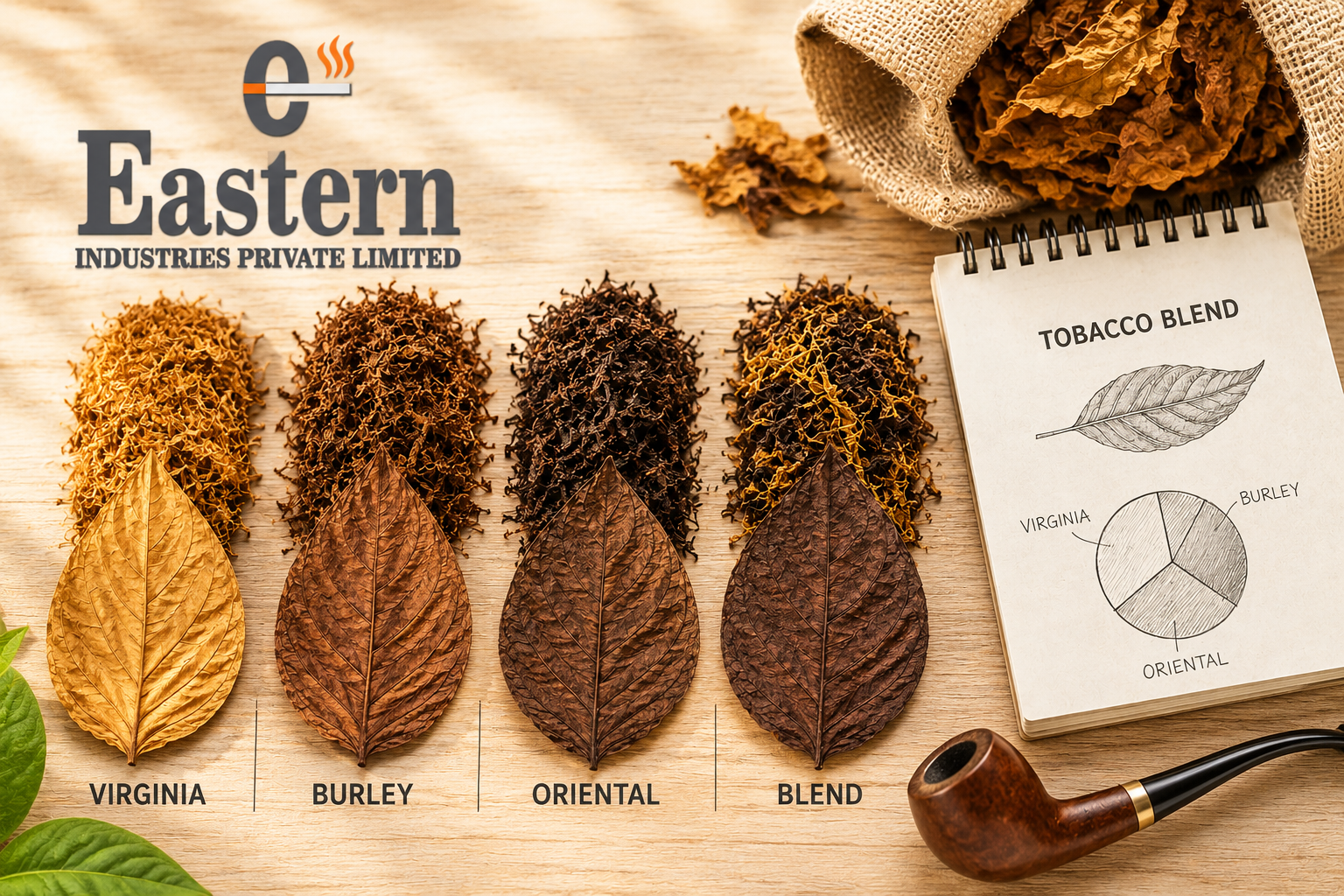
What Is a Tobacco Blend? Virginia, Burley, Oriental and How They Are Combined
A cigarette brand is just a name on a packet. What sits inside that packet, the specific combination of leaf types, their origins, their processing methods, and their proportions, is what actually shapes the experience. Two cigarettes priced the same and packaged similarly can taste completely different simply because they use a different tobacco blend ratio.
Understanding tobacco blend types cigarette manufacturers use is particularly important for anyone involved in sourcing, contracting, or product development. It is also genuinely useful for consumers who want to move beyond the label and understand what they are actually smoking.
The Three Pillars: Virginia, Burley, and Oriental
Most of the world’s cigarettes are built around three core leaf varieties. Each has a distinct chemical profile, flavor character, and role in the blend.
Virginia Tobacco: The Foundation
Virginia is the workhorse of the cigarette world. Sometimes called bright tobacco or flue cured tobacco, it gets its name from the state where it was first commercially cultivated, though today it is grown extensively in Brazil, Zimbabwe, India, and across Asia.
Virginia leaves are thin and light in color, ranging from lemon yellow to deep orange, and they are remarkably high in natural sugar content. That sugar is what gives Virginia its clean, slightly sweet, mild taste. When burned, it produces a smooth smoke with a naturally pleasant aroma.
In terms of nicotine, Virginia sits in the moderate range, which makes it versatile. It burns evenly and holds its shape well during manufacturing. For these reasons, Virginia is typically the largest component in most cigarette blends, often making up 50 percent or more of the total leaf weight.
The flue-curing process is critical to what Virginia tobacco becomes. Leaf is hung in curing barns and exposed to heat from flues rather than open smoke. This locks in the natural sugars while driving off chlorophyll, producing that characteristic bright, clean character that blenders rely on.
Burley Tobacco: The Body Builder
If Virginia brings sweetness and lightness, Burley brings body and depth. Burley is an air-cured leaf, meaning it is simply hung in ventilated barns and left to dry naturally over several weeks. This process depletes most of its natural sugars, leaving behind a leaf that is low in sweetness but high in nicotine, often carrying twice the nicotine level of Virginia.
The flavor of Burley is often described as dry, nutty, or slightly woody. On its own it can be quite harsh. But in a blend, it adds backbone. It also has a porous, absorbent structure that makes it excellent at holding casing, which includes the sweeteners, flavoring agents, and humectants that manufacturers add to adjust taste and moisture. This absorptive quality is one of the main reasons Burley became so central to American-style blends.
Burley is primarily grown in the United States, particularly in Kentucky and Tennessee, though production in Malawi and other African countries has grown significantly. It typically makes up anywhere from 20 to 40 percent of the leaf in American blend cigarettes.
Oriental Tobacco: The Aromatic Accent
Oriental tobacco, also called Turkish tobacco, is the most distinctive of the three. It is grown in the sun-drenched regions of Turkey, Greece, Bulgaria, and Macedonia, where poor, dry soils and intense sunlight produce small, intensely aromatic leaves.
Oriental leaves are the smallest of the major tobacco types, and that small size concentrates everything including the resins, the essential oils, and the complex aromatic compounds. The result is a tobacco with a uniquely spicy, almost perfumed quality that is difficult to replicate with any other leaf. The nicotine content is relatively low, but the flavor contribution is enormous. Even a small percentage in a blend noticeably shifts the sensory profile.
In a Virginia-Burley-Oriental blend, the Oriental component is usually the smallest by weight, often just 5 to 15 percent, but it contributes far more than its proportion suggests in terms of aromatic character. It is what gives many premium cigarettes that extra layer of complexity that separates them from simpler products.
How the Three Leaf Types Are Combined?
Now that we understand each leaf individually, the interesting part is how blenders combine them and why different regional traditions have produced distinctly different results.
The American Blend
The American blend is the world’s most commercially dominant cigarette style. It brings together all three major leaf types, Virginia, Burley, and Oriental, in a single cigarette. A classic American blend might run 50 to 60 percent Virginia for base sweetness and burn quality, 30 to 35 percent Burley for body and nicotine delivery, and 5 to 15 percent Oriental for aromatic complexity.
This combination creates a balanced smoke, not too mild and not too strong, with enough sweetness to be approachable and enough depth to be satisfying. Camel, Lucky Strike, and Marlboro all built their original identities around variations of this structure. The American blend also lends itself well to casings and top dressings, which is why menthol, vanilla, and other flavored variants are so common in this style.
The English Blend
The English or British blend is often a simpler construction, typically carrying a higher ratio of Virginia with Oriental and little or no Burley. This produces a drier, more aromatic smoke with a lighter body. Smokers who appreciate a cleaner, less heavy cigarette often gravitate toward English-style blends.
Some premium English-style cigarettes use nothing but Virginia and Oriental at different ratios, letting the natural leaf character speak without the heavier influence of Burley.
Virginia-Only and Other Single-Leaf Styles
Some cigarettes, particularly in parts of Europe and the Asia-Pacific region, are built almost entirely on Virginia tobacco. These tend to be very light, clean, and mild. They rely entirely on the quality of the leaf and the precision of the blending to deliver flavor, since there is no Burley for body and no Oriental for aromatic complexity.
The Role of the Tobacco Blend Ratio
Setting the right tobacco blend ratio is not guesswork. For manufacturers, it involves balancing a number of competing factors at the same time.
Flavor and aroma come first. The blend needs to taste the way the target consumer expects it to taste. Then there is nicotine delivery, which is partly driven by leaf type and partly by blend proportion. Burn rate matters too. A properly constructed blend should burn at a consistent pace without going out or burning too fast.
Physical consistency is another concern. Leaf cut size, moisture levels, and tobacco quality factors like moisture content all influence how evenly the blend burns and how well it performs on high-speed cigarette-making machinery. A blend optimized for flavor that cannot be reliably processed at scale is of limited commercial value.
This is where experienced manufacturers and contract producers earn their value. The ability to develop a blend that not only tastes right but performs consistently across millions of cigarettes is a skill that takes years to build.
American Blend vs English Blend: A Practical Comparison
The American blend vs English blend distinction is worth understanding for anyone making product decisions.
American blends are richer and fuller-bodied, often sweeter due to Burley’s casing absorption. They work well for flavored variants and carry higher nicotine potential.
English blends are lighter, drier, and more aromatic. They let the leaf character dominate and are often preferred by smokers who dislike a heavy smoke.
Virginia-heavy blends are very clean and mild. They depend entirely on leaf quality for their character and are popular in price-sensitive markets where simplicity also helps reduce cost.
Oriental-heavy blends are intensely aromatic and complex. They appeal to a niche audience but are highly valued in premium segments.
There is no objectively superior style. Market preference varies significantly by region, demographic, and price point. The key is understanding what each structure delivers and matching it to the target smoker.
Working With a Custom Cigarette Blend Manufacturer
For brands, distributors, and private label operators, getting the blend right means working closely with a custom contract cigarette manufacturing partner who understands the full complexity of leaf selection, blend development, and production at scale.
The blend development process typically begins with a brief covering what market the product is targeting, what price tier it sits in, what flavor profile it needs, and what regulatory requirements apply in the destination market. From there, a blend house or contract manufacturer will propose initial leaf combinations, produce sample batches, and iterate based on sensory feedback and quality testing.
Eastern Tobacco has spent over two decades in this process, sourcing leaf, developing blends, and producing cigarettes that meet the varied requirements of markets across the world. The depth of knowledge required cannot be shortcut. Each leaf type behaves differently depending on origin, harvest, curing method, and storage conditions. A blend that works beautifully with one season’s Virginia crop may need adjustment when a new crop comes in with different sugar levels.
This is the craft behind the blend, invisible to the consumer but essential to every cigarette that ends up in their hands.
Conclusion
The tobacco blend is where science and craft come together. Virginia brings sweetness and a reliable burn. Burley adds body and nicotine depth. Oriental contributes aromatic complexity that no other leaf can replicate. Together, in the right proportions, they produce the full range of cigarette experiences that smokers around the world have come to expect.
Understanding how these leaf types work, individually and in combination, is fundamental knowledge for anyone working in the tobacco industry, from product developers to procurement teams to private label brands looking to stand out in a competitive market.